Interior Clean-Up
Barrhaven Drywall Repair Clean-Up in an Occupied Home: A Practical Plan for Fine Dust, Furniture and Vent Covers
A practical Barrhaven guide to cleaning ordinary fine dust after a localized drywall repair while protecting furniture, finishes and everyday access in an occupied home.
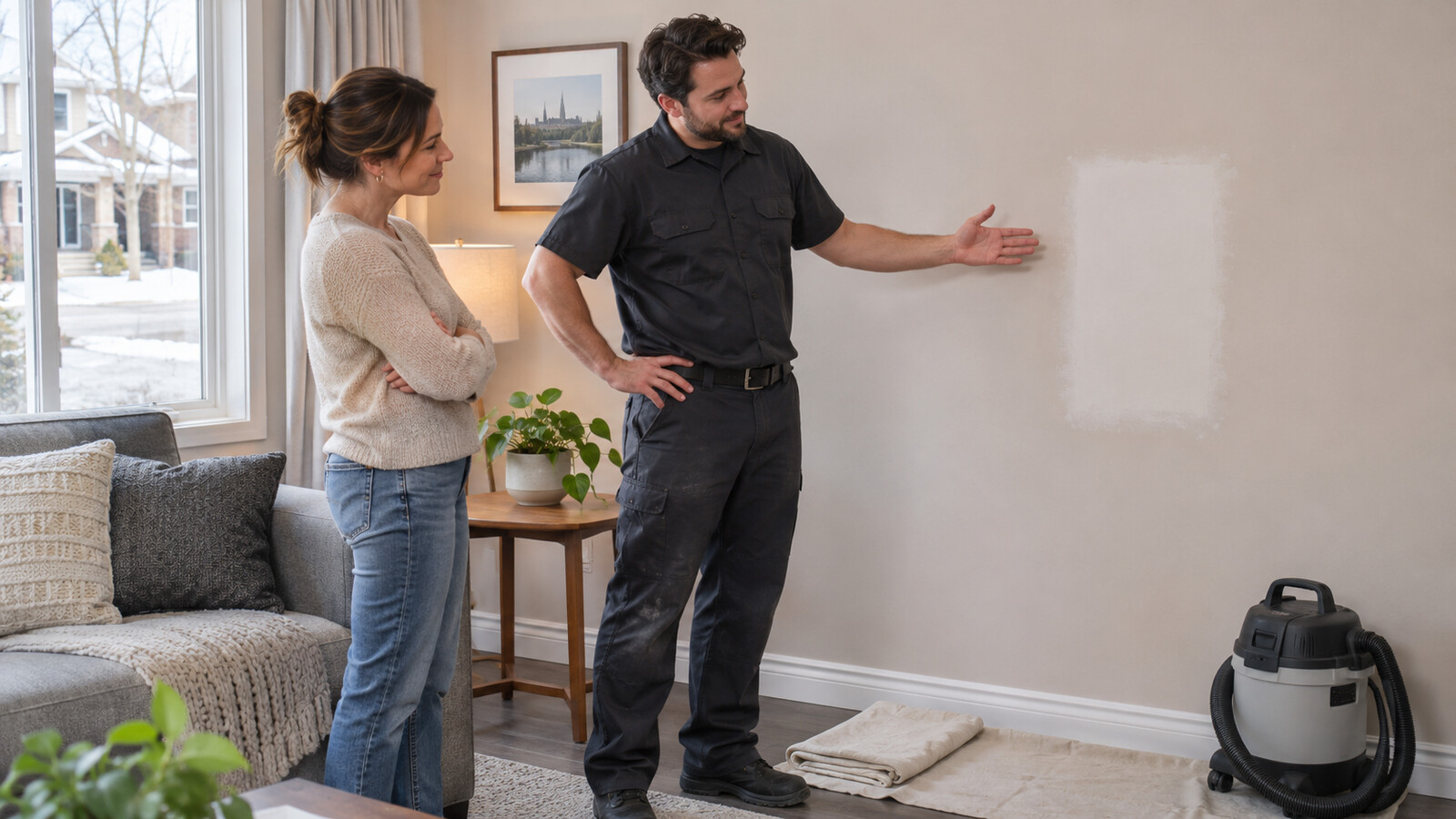
A small drywall repair can leave a surprisingly wide cleaning area. Fine ordinary dust settles beyond the patched wall, especially on nearby furniture, window ledges, baseboards and floor edges. In an occupied Barrhaven home, the challenge is to clean the work zone without spreading residue into the rest of the house or treating every room like an empty renovation site.
The most useful approach starts with a clear contractor handoff. Confirm that sanding and touch-ups are finished, identify which protective coverings should stay in place, and agree on the surfaces included in the clean-up. The objective is a controlled reset of ordinary non-hazardous dust—not demolition clean-up, duct remediation or repair of unfinished work.
Confirm that the repair is ready for cleaning
Do not schedule the final clean while the wall is still being sanded, drilled or painted. One additional pass with a sanding block can put dust back onto surfaces that were already detailed. Ask the contractor whether the compound, primer, paint or caulking needs more curing time before nearby surfaces are wiped or furniture is returned to position.
Photograph the repaired wall and the surrounding room before cleaning begins. Note paint splatter, chips, exposed fasteners, unfinished edges or damage that belongs on the contractor's deficiency list. Cleaning should not conceal incomplete work or turn an ordinary interior clean-up appointment into a repair assessment.
- Confirm that sanding, drilling and cutting are complete.
- Ask which floor protection and barriers should remain in place.
- Identify the repaired wall and the full dust-settling area.
- Document unfinished work before any surface is cleaned.
- Keep residents, pets and unrelated household activity outside the work zone.
Separate ordinary drywall dust from conditions that need a specialist
This guide applies to ordinary residue from a known, recent drywall patch or replacement. Stop and seek appropriate assessment if the material is unknown or if the area involves suspected asbestos, lead, mould, sewage, animal waste, a pest problem, chemical residue or dust from fire damage. Do not sweep, sample or disturb questionable material to decide what it is.
Water damage also changes the scope. If the repair followed a leak, confirm that the source has been corrected and that damp materials, odour or visible growth have been addressed before routine cleaning begins. An ordinary clean-up should not be presented as remediation, air-quality testing or restoration.
Define the work zone before moving furniture
Start with a wide view of the room. Include the repaired wall, nearby furniture, the nearest window, doors, floor transitions and the route to the exterior. Dust can land behind a sofa or along a heating grille even when the centre of the floor looks clean. A useful scope names these surfaces instead of relying on a general instruction such as “clean the living room.”
Move only what is necessary to reach the agreed area. Small decor, electronics and loose textiles should be removed by the owner or placed in a clean room. Larger furniture can be shifted when the route and floor protection allow it, but it should not be dragged across dusty flooring. Photograph cable connections before unplugging approved electronics, and keep personal papers or fragile items with the owner.
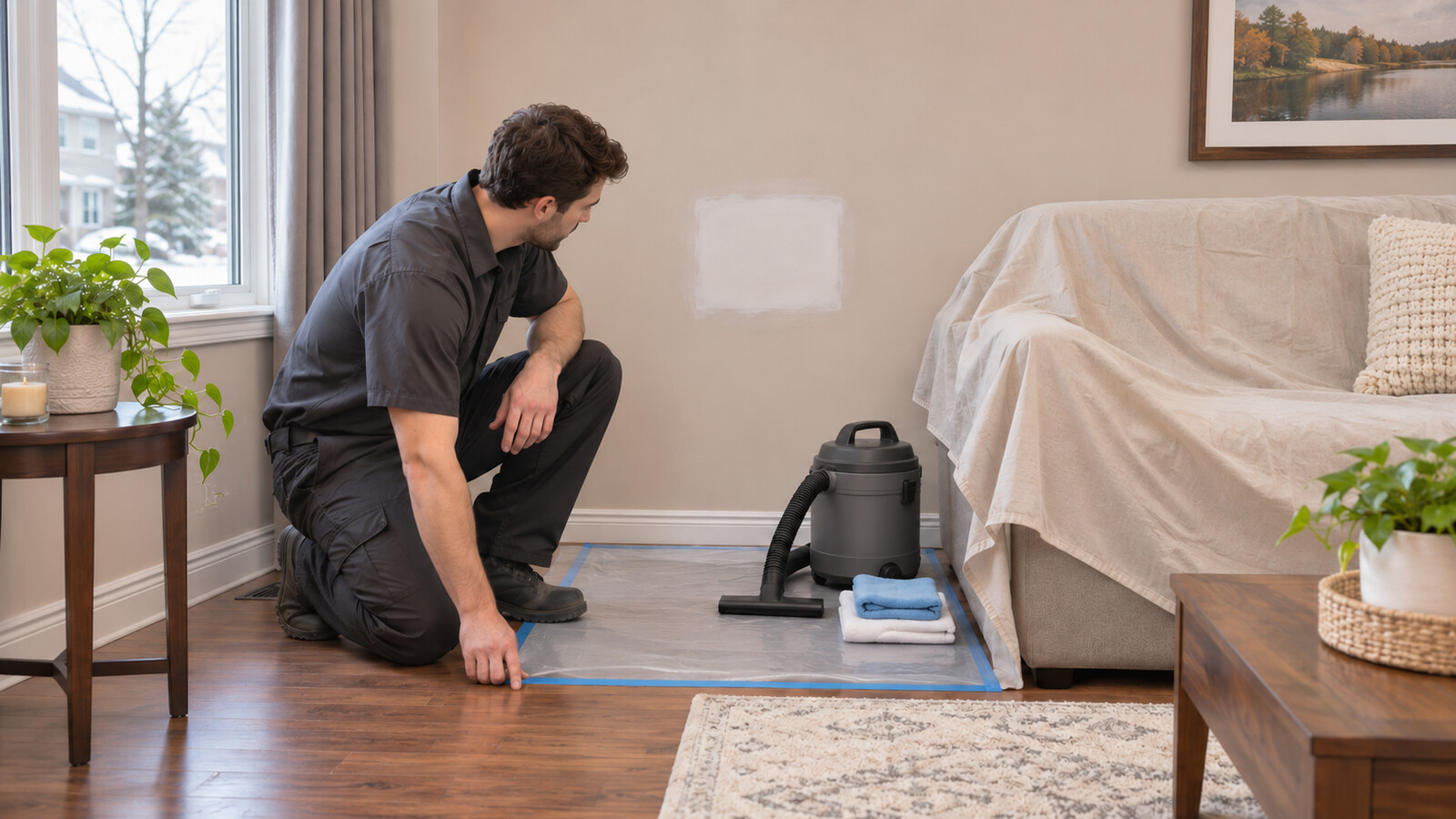
Handle coverings and soft furnishings in a controlled order
Protective sheets can hold dust on their upper surfaces. Fold or roll them inward slowly rather than snapping or shaking them in the room. Confirm whether a covering belongs to the contractor before removing it. Disposable plastic, reusable drop cloths and padded floor protection may each have a different handoff plan.
Curtains, cushions, throws and fabric lampshades should not be brushed off over a clean floor. Keep visibly dusty textiles separate from finished surfaces and follow their care labels. Upholstery or area rugs that received substantial dust may need their own agreed cleaning scope rather than a quick surface pass during wall clean-up.
Remove fine dust in deliberate passes
Dry sweeping can lift fine material back into the air and move it into corners. A controlled sequence usually works from higher accessible ledges toward baseboards and floors, using suitable vacuum attachments and finish-compatible wiping. The exact equipment should match the residue, surface and manufacturer's care instructions.
- Remove agreed packaging and ordinary non-hazardous debris.
- Vacuum accessible higher ledges, trim and horizontal surfaces without scraping them.
- Use a clean, compatible wiping method on painted and finished surfaces.
- Detail baseboards, floor edges, thresholds and the route used by the repair crew.
- Finish the floor using the method appropriate to wood, laminate, vinyl, tile or carpet.
- Inspect in side light and repeat only where visible residue remains.
Change or clean attachments and cloths as they load up. A cloth that is carrying white residue can spread it across dark furniture or newly painted trim. Avoid aggressive scrubbing on fresh paint, excess water on wood or laminate edges, and untested products on stone, metal or specialty finishes.
Include accessible vent covers without treating the job as duct cleaning
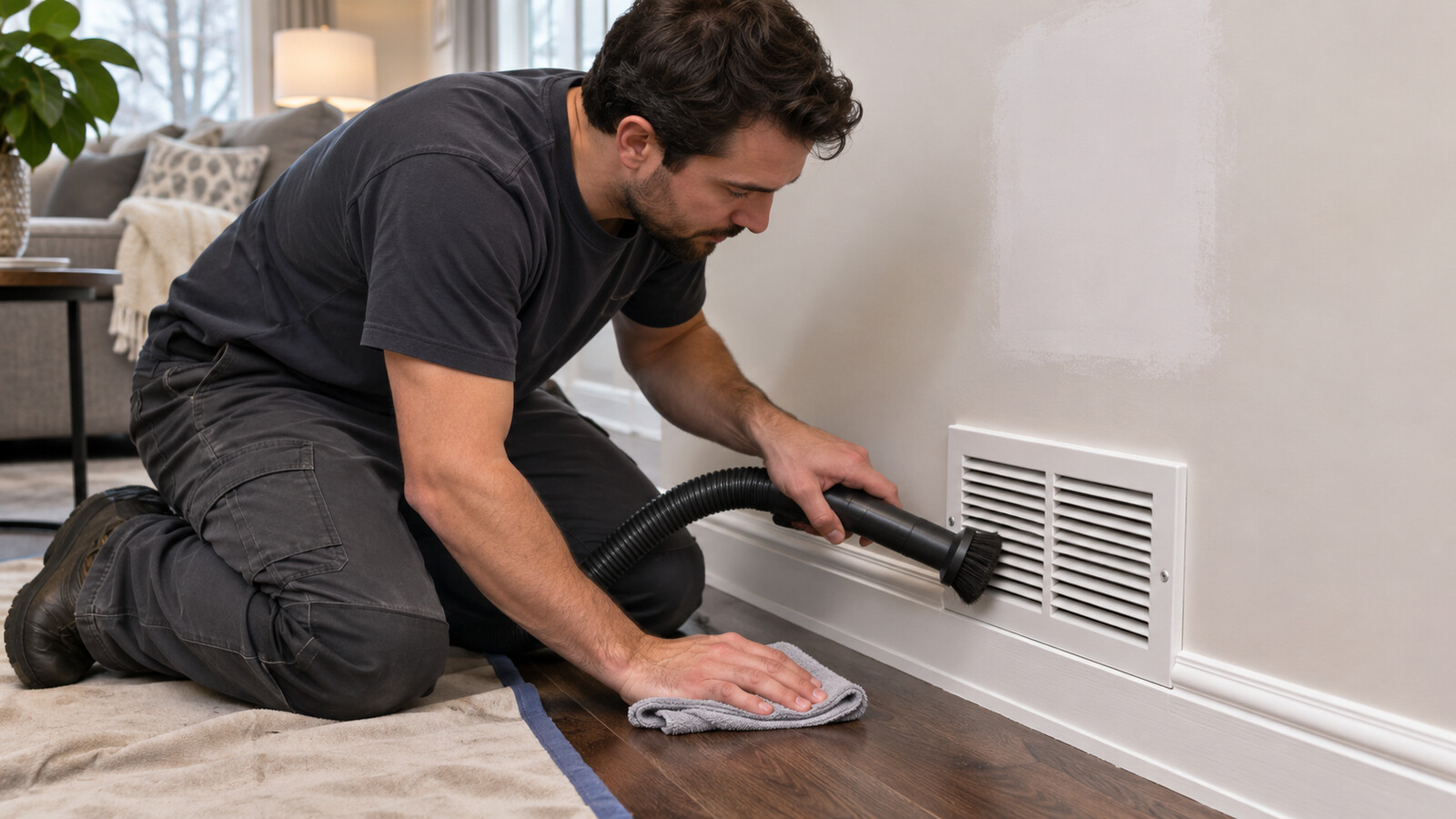
Photograph nearby supply and return grilles when requesting the quote. An accessible exterior cover may be included in an ordinary surface-cleaning scope when it can be handled safely and reinstalled correctly. Do not reach into ductwork, operate unfamiliar dampers or remove a cover that is painted in, damaged or connected to equipment.
If dust appears to have travelled through the system, if residue returns after the room is cleaned, or if the heating or cooling equipment was running during substantial sanding, ask an appropriate HVAC professional about the next step. Cleaning the visible face of a grille is not the same as inspecting or cleaning the duct system.
Check the route beyond the repaired room
Follow the route used for tools, sanding equipment and debris. Check the doorway threshold, hall floor, stair edges and exterior exit rather than assuming the dust stayed beside the wall. In a condo or managed property, include the approved elevator, corridor protection and loading route only when those shared areas are part of the confirmed scope.
Keep residents' regular route separate where possible. In an occupied home, a smaller well-defined work zone is often more manageable than moving belongings through several rooms. Confirm where cleaned furniture can be placed and who will decide when the repaired area is ready for normal use.
What to send for a firm clean-up quote
Send wide photos of the repaired room plus close photos of the wall, nearby ledges, baseboards, floor edges, accessible vent covers and any furniture that must be moved. Include the Barrhaven address, floor level, parking or elevator details, the date sanding ended, the floor type, whether the home is occupied and the required deadline.
State whether protective coverings remain, whether the contractor is returning, and whether textiles, electronics or fragile items are still in the room. Clear photos help separate an ordinary fine-dust clean-up from work that needs a contractor, HVAC professional or remediation specialist.
A localized drywall repair does not require treating the entire home like a construction site. When the repair is genuinely finished, the dust zone is defined and the cleaning sequence protects occupied areas, the room can be reset without pushing residue into the rest of the property.
The images in this article are illustrative examples and do not show an actual Mattabo Property Care job.
Photos are illustrative examples of typical residential service results.