Rental Property Care
Barrhaven Rental Laundry Room Turnover Clean-Up: A Practical Handoff Guide
A practical Barrhaven guide for landlords and property managers preparing a rental laundry room for the next tenant, with clear limits around machines, hookups and utility access.
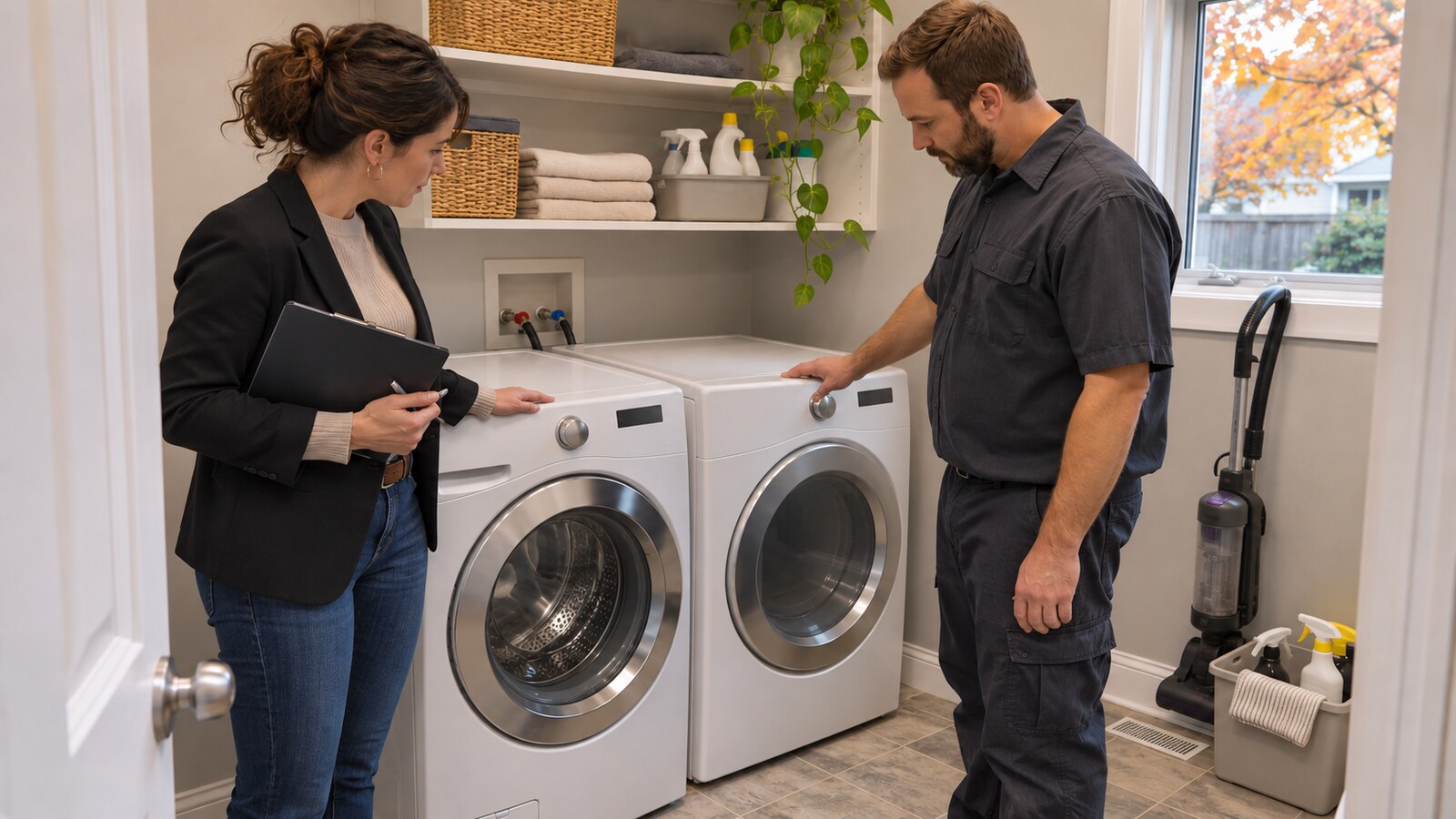
A rental laundry room is small, but it can hold several different turnover issues at once: forgotten products, lint around floor edges, marked shelves, blocked shutoffs and questions about who owns the machines. In a Barrhaven townhouse, condo or detached rental, the most useful clean-up starts with a clear scope rather than immediately moving appliances or opening utility connections.
The goal is to leave the room orderly, accessible and documented for the next tenant. That usually means removing approved ordinary belongings, cleaning reachable surfaces, checking the visible area around machines and keeping access to panels, valves and doors clear. Appliance repairs, electrical work, plumbing changes, gas work, vent service and hidden moisture problems belong with the appropriate qualified provider.
Confirm ownership before touching machines or supplies
Start by confirming whether the washer and dryer belong to the landlord, the departing tenant or another party. Record the make and model information where visible without moving the appliance. Photograph existing dents, scratches, loose knobs, cracked hoses, damaged flooring and any marks on nearby walls. The property manager should decide what is included in the tenancy and what is approved for removal.
Check shelves, cabinets and baskets for detergent, dryer sheets, cleaning products, keys, coins and personal items. Do not combine unknown products or pour them into drains. Unlabelled, leaking or damaged containers should be separated from ordinary clean-up and reported for direction. Personal belongings should be set aside for the manager rather than mixed with an approved removal load.
- Confirm who owns each machine and accessory.
- Photograph the room before moving ordinary loose items.
- Identify products or containers that need separate direction.
- Keep shutoffs, panels and the room door accessible.
- Record existing appliance, wall and floor damage before cleaning.
Clear shelves and create a simple inventory
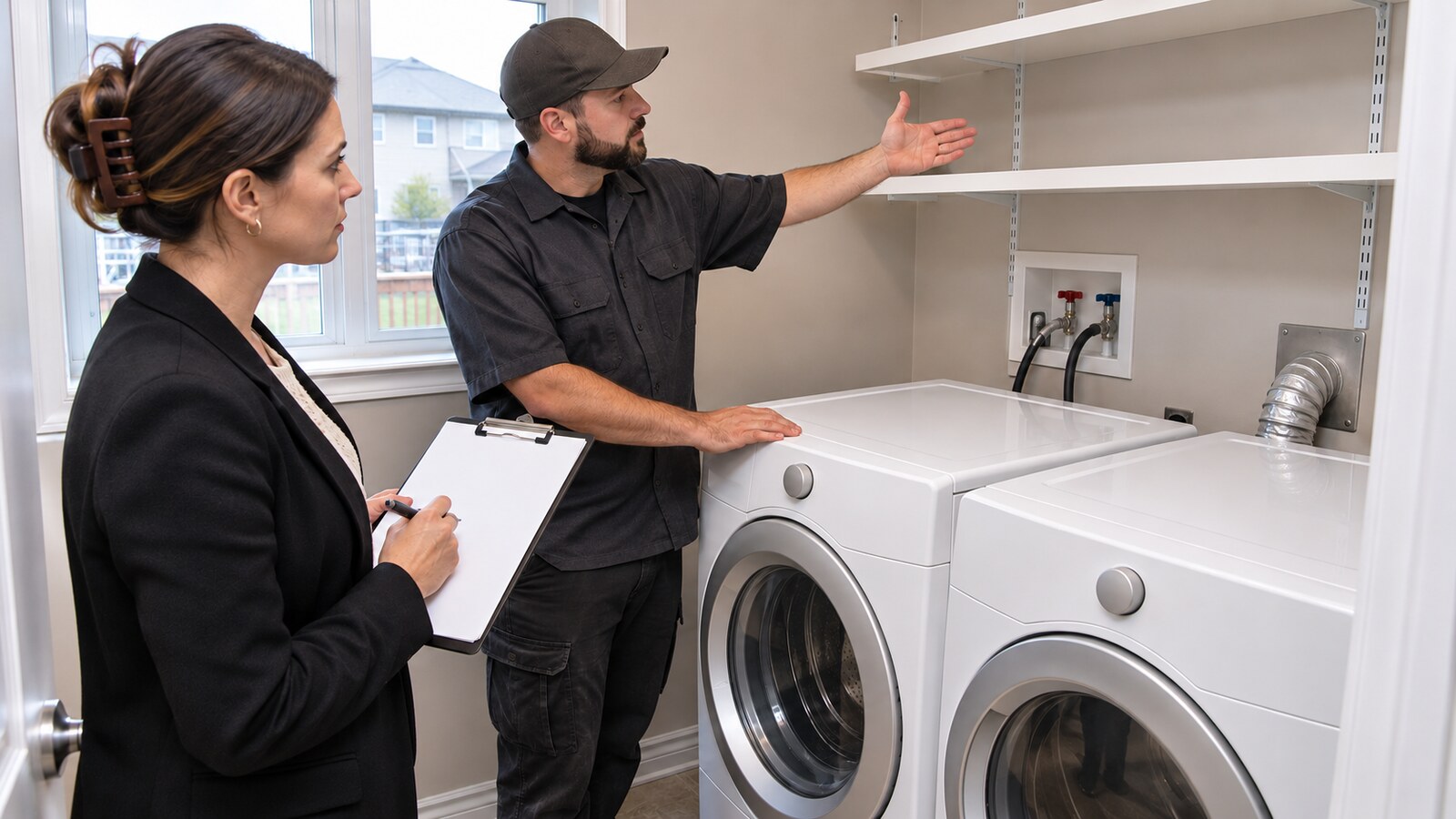
Empty only the shelves and cabinets included in the approved scope. Group items into keep, return to the tenant, relocate within the property and approved ordinary removal. Plain bins can keep these groups separate while the work is underway. Avoid stacking heavy products on high shelves or placing loose items on top of the machines where vibration could move them later.
Once a shelf is clear, wipe its reachable surfaces using a method suited to the material. Pay attention to corners, shelf brackets and the underside of lower shelves where lint collects. If a shelf is loose, swollen, cracked or pulling away from the wall, document it and leave repair decisions to the manager. A clean-up visit should not hide a maintenance issue behind newly arranged supplies.
Clean machine exteriors without opening service areas
Wipe the top, front, sides that are safely reachable, control surround and door or lid exterior using suitable materials. Clean around handles and detergent-drawer fronts without forcing parts. Do not remove panels, reach behind energized equipment, disconnect hoses or pull a stacked unit forward as part of ordinary surface clean-up. If access requires moving a heavy machine, confirm the proper provider and method first.
For the dryer, clean the visible exterior and the accessible area around the lint-screen opening according to the appliance instructions. A blocked, damaged or uncertain vent route is not a cosmetic cleaning task. Record concerns such as a loose connection, damaged cord, unusual odour or heavy hidden lint and arrange qualified inspection rather than attempting a repair during turnover.
Work from high surfaces down to the floor edges
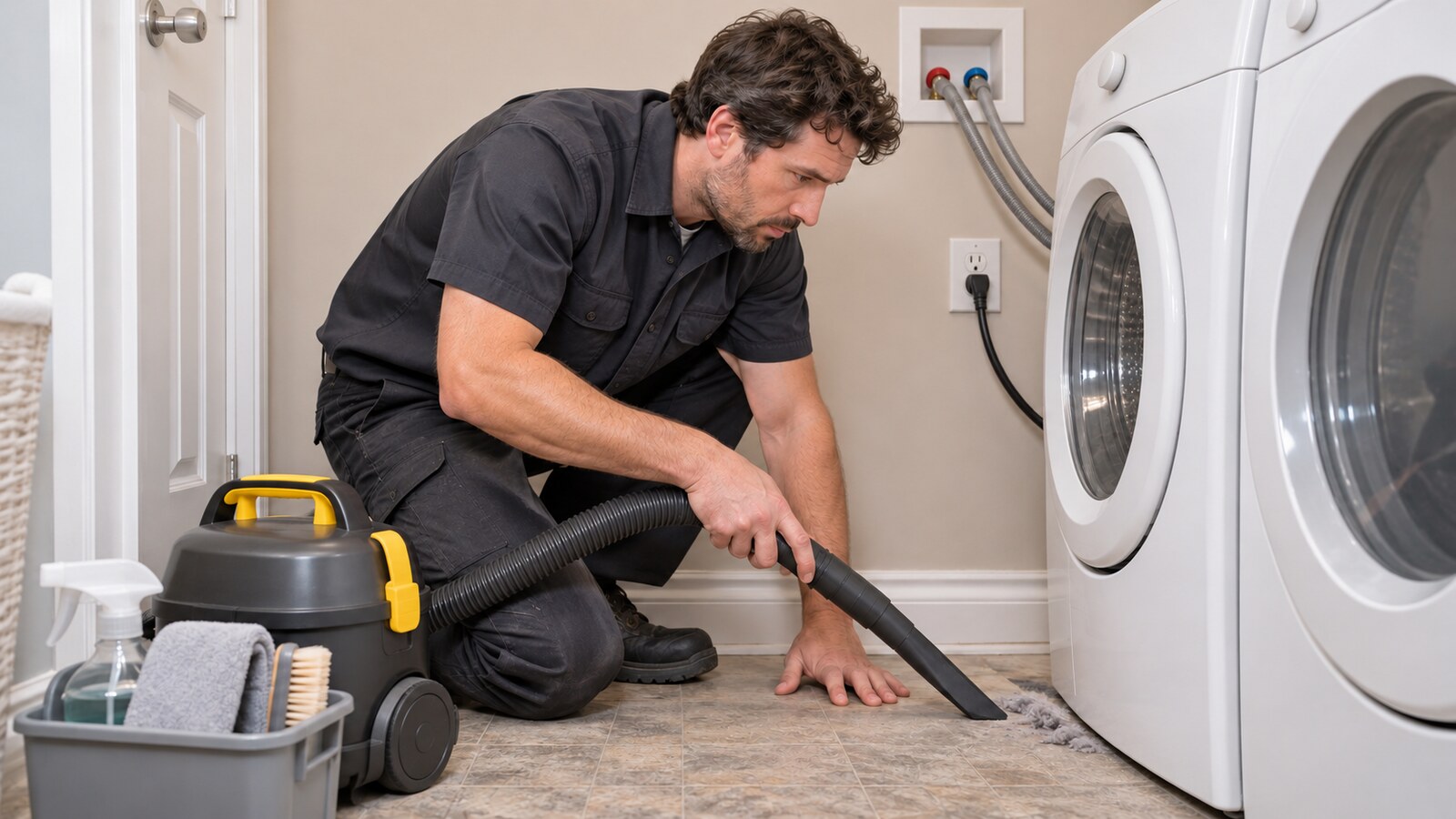
Dust accessible upper shelves, then cabinet faces, appliance tops and lower surfaces before vacuuming the floor. This order keeps loose lint from falling onto an area that has already been cleaned. Use narrow attachments along baseboards and reachable gaps, but keep tools clear of hoses, cords, drains and connections. Do not insert equipment into openings that are not intended for routine cleaning.
Laundry-room floors often collect lint, small paper scraps, product granules and ordinary grit near corners. Remove dry loose debris first. Then clean the open floor using a method appropriate for the finish. Keep the room door, hallway and stair route dry and unobstructed so the turnover work does not create a new slip or access problem.
Keep utility access visible
The finished room should not hide shutoff valves, electrical panels, floor drains, cleanouts or access doors behind products and baskets. Leave enough room for the next tenant or service provider to reach these areas without unloading a shelf. Do not operate an unfamiliar valve or panel simply because it is visible; the handoff record should show where it is and whether access is clear.
If the laundry room also contains a furnace, water heater or other mechanical equipment, maintain the required clear working area and move ordinary storage away from it. Do not place clothing, cardboard or cleaning products on mechanical equipment. Questions about clearances, combustion, venting or equipment condition should be directed to the appropriate specialist.
Treat water marks and odours as information
A stain on the floor, swollen baseboard, peeling paint or persistent musty odour may point to a condition that ordinary cleaning cannot resolve. Photograph the area before wiping reachable surfaces. Note whether it is dry or active without making claims about the source. If water is present, a hose appears damaged or the condition is uncertain, pause the clean-up and have the property manager arrange assessment.
Do not cover a questionable area with a mat, bin or appliance accessory for the sake of a cleaner-looking handoff. Clear documentation protects the next step. The room can still be organized around the affected area if it is safe to do so, but the issue should remain visible to the person responsible for deciding on repairs.
Reset storage for the next tenant
After cleaning, return only approved property-owned items. Keep a small number of supplies together in a stable, reachable location and leave open shelf space for the incoming tenant. Avoid decorative staging that could be mistaken for included products. The room should communicate function: clear machine access, usable storage and a straightforward path from the doorway.
- Remove temporary sorting bins and ordinary approved debris.
- Leave shelves dry, stable and partly open for tenant use.
- Keep appliance tops and utility access free of storage.
- Check the doorway, hall and floor route for loose items.
- Take final photos from the same general angles used at the start.
Complete the turnover record
Final photos should show the full room, both machine exteriors, shelves, floor edges, utility access and any unresolved condition. Record which items were removed, relocated or left for the incoming tenant. If a repair or specialist inspection is pending, note it separately so a clean appearance is not mistaken for a completed maintenance decision.
For a managed property, confirm where keys, appliance instructions and approved accessories belong. Keep sensitive access information out of public-facing notes. A concise handoff makes it easier for the landlord, property manager and incoming tenant to understand what was completed and what still needs attention.
What to send for a Barrhaven laundry-room turnover quote
Send wide photos of the entire laundry room plus close views of the machines, shelves, floor edges, utility access and any damaged or leaking area. Include the Barrhaven address, unit type, appliance ownership, access or parking instructions, approved removal items and the deadline. Identify stacked machines, stairs, uncertain products, water, odours or repair concerns before the scope is confirmed.
A good rental laundry-room handoff is not about making equipment look new. It is about removing approved ordinary items, cleaning reachable surfaces, keeping utilities accessible and documenting conditions that need a different provider. That practical boundary gives Barrhaven landlords and property managers a clearer room and a more reliable record for the next tenancy.
Photos are illustrative examples of typical residential service results.