Listing Preparation
Manotick Basement Storage Clean-Up Before a Home Inspection: A Practical Access Plan
A practical Manotick guide for clearing ordinary basement storage so an inspector can reach walls, panels, shutoffs and mechanical areas without turning the job into a full move.

A basement does not need to be empty before a home inspection, but important areas should be reachable and visible. When boxes, spare furniture and seasonal items crowd the walls, an inspector may have less room to view the space or reach equipment. A focused storage clean-up can improve access without turning the week before an inspection into a full household move.
For Manotick homeowners and real-estate agents, the useful goal is a controlled route through the basement: clear stairs, stable storage, accessible panels and shutoffs, and enough room around mechanical equipment for the appropriate professional to work. The clean-up should deal only with ordinary, clearly identified household contents.
Start with the inspection route, not the boxes
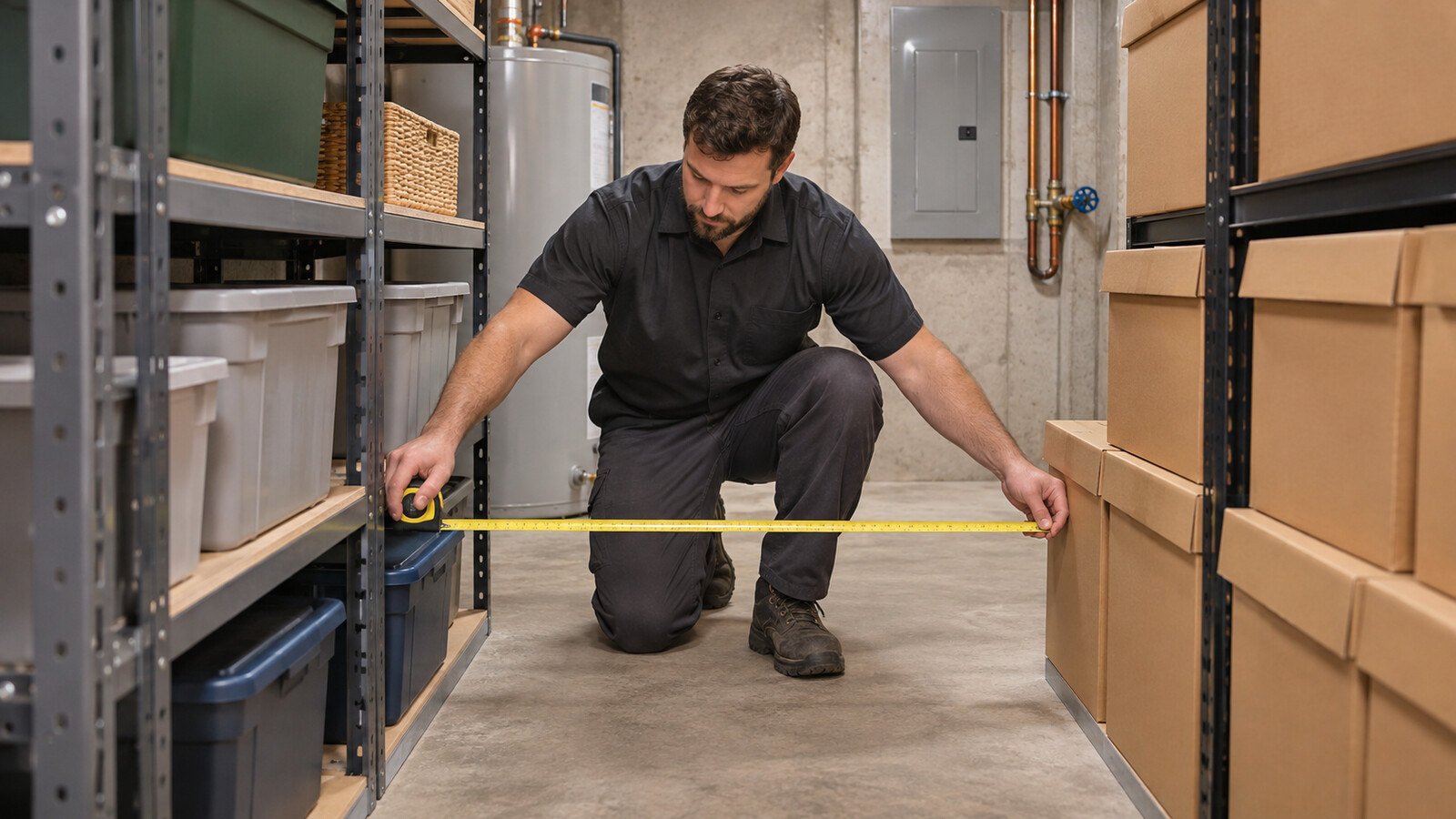
Walk from the basement entrance to the electrical panel, water shutoff, floor drain, furnace or other mechanical area, and any wall sections the seller wants kept visible. Note tight turns, low overhead clearances and doors that need to open fully. This route becomes the first priority before any detailed sorting begins.
Take wide photographs before moving anything. Include the stairs, main aisle, shelving, wall edges and equipment zones. These images help define the quote and prevent a narrow access job from quietly expanding into unrelated closets, workshops or finished rooms.
- Show the complete stairway and landing.
- Photograph the main aisle from both directions.
- Include panels, shutoffs, drains and mechanical areas.
- Identify furniture or shelving that must remain.
- Mark rooms or storage zones that are outside the scope.
Create one temporary sorting zone
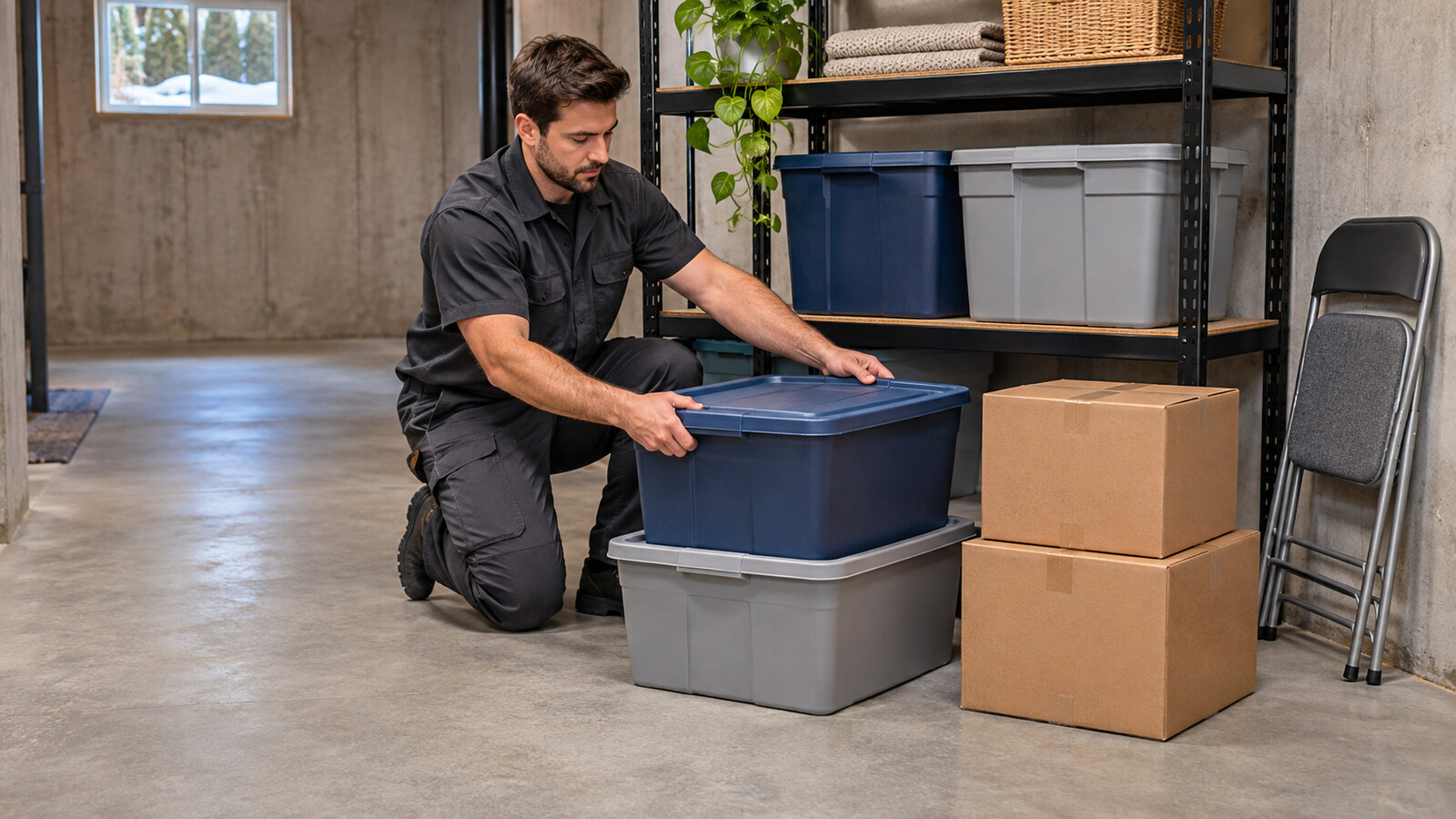
Choose a dry, approved area away from stairs, doors and equipment for items that need a decision. Use separate groups for belongings that will stay, move upstairs, leave the property or require the owner's review. Avoid scattering small piles across the basement; several half-finished piles can block more floor than the original storage.
Keep private papers, photographs, keys and clearly personal containers together for the owner. A clean-up crew should not decide what confidential or sentimental material can be discarded. Sealed containers should stay closed unless the owner has identified the contents and approved the next step.
Stabilize what stays in the basement
Place heavier ordinary items low on sound shelving and keep lighter containers above them. Do not stack loose objects where they can lean into the inspection route. Leave cabinet doors, shelving fasteners and the condition of the surrounding floor visible when possible.
Use clear space rather than decorative staging as the measure of success. A neat wall of containers can still be a problem if it covers the foundation wall, blocks a panel or forces someone to step around unstable furniture. The layout should make the basement easier to navigate and review.
Keep equipment and shutoffs accessible
Do not place boxes, rugs or spare materials in front of an electrical panel, water shutoff, drain, pump, furnace or other mechanical equipment. Do not disconnect, open or service equipment as part of an ordinary storage clean-up. If access requirements are unclear, the homeowner should confirm them with the relevant inspector or qualified trade.
Preserve ventilation openings and avoid leaning items against pipes, wiring or ducts. A clean route should reach the equipment without using appliances, shelves or stored belongings as handholds. Keep cleaning products and tools out of the same access zone while the work is underway.
Know the stop conditions
Pause ordinary work if the basement contains unknown liquids, leaking containers, chemicals, fuel, ammunition, needles or other sharps, biological material, significant pest contamination, damaged wiring, active water entry or material suspected to contain mould or asbestos. These conditions require direction beyond a routine clean-up or non-hazardous junk-removal scope.
Do not sweep, open, compress or relocate an unknown material to make the room look finished. Photograph its location without handling it, keep people away from the immediate area and notify the homeowner or property manager. Ordinary work can continue only where the approved area remains safe and separate.
Finish floors and wall edges last
Once approved items are stable or removed, collect ordinary dry debris from the route, under accessible shelf edges and along exposed walls. Use methods suitable for the floor finish and avoid pushing dust or debris into a drain. Do not move heavy built-in equipment or force shelving away from a wall.
Check the stair treads, landing and threshold on the way out. Small loose objects, cords and folded mats can create a poor route even when the storage room itself looks organized. Return only the items that belong in the approved space and keep the main aisle open.
Document the handoff for the seller and agent
Take completion photos from the same positions used at the start. Show the cleared stairway, main aisle, accessible equipment zones and visible wall edges. Note any excluded material, locked area or large item that remains so the seller and agent know what was and was not completed.
- Clear view of the stairs and landing.
- Open route to panels, shutoffs and mechanical areas.
- Stable shelving and contained ordinary storage.
- Visible wall and floor edges where access was approved.
- Written note for excluded items or specialist concerns.
What to send for a basement clean-up quote
Send wide photos of the basement, stairs, shelving and inspection route, plus closer views of ordinary items that may need removal. Include the Manotick address, parking and entrance details, stair width or tight turns, the inspection deadline and any items that must stay. Mention unknown materials or moisture concerns before the appointment so they are not treated as ordinary contents.
A useful pre-inspection basement reset is not about hiding normal storage. It is about creating stable, visible and practical access without making decisions the owner should make or handling conditions that need a specialist. With the route planned first and the scope kept clear, sellers can prepare the space without turning the clean-up into a second renovation project.
The images in this article are illustrative examples and do not show an actual Mattabo Property Care job.
Photos are illustrative examples of typical residential service results.