Junk Removal
Ottawa Attic Cleanout Before a Home Sale: A Practical Plan for Access, Storage and Ordinary Junk
A practical Ottawa attic-cleanout guide covering safe access, storage decisions, finished walking surfaces, sorting and ordinary non-hazardous junk removal before a home sale.
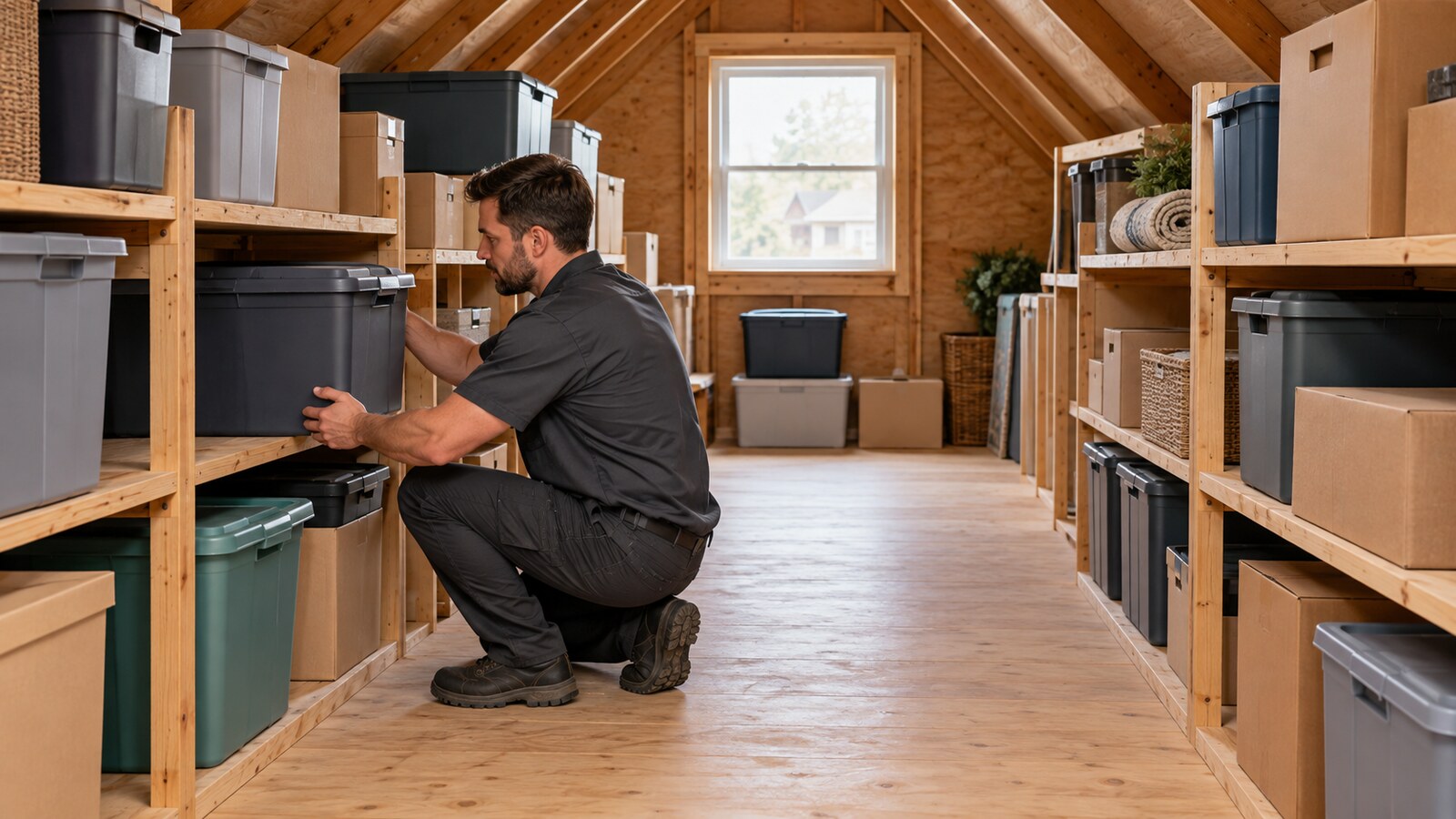
An attic can become the last room anyone wants to address before a home sale. Seasonal decorations, old files, empty boxes and furniture may have accumulated for years, while the access route and limited headroom make every decision slower. Leaving it untouched, however, can make a useful storage area look smaller and create uncertainty about what will remain at closing.
A practical attic cleanout is not a race to empty the space. It starts with confirming that the attic is safe to enter, deciding what the seller will keep, and separating ordinary household items from anything that needs specialized handling. For Ottawa sellers and real-estate agents, the aim is a controlled, tidy handoff without disturbing insulation, wiring or unfinished structural areas.
Confirm the attic is safe to enter
Begin at the access point. A permanent stairway with a handrail and finished walking surface is different from a pull-down ladder, ceiling hatch or unfinished truss space. Check lighting, stair stability, head clearance, floor condition and the route back through the home before moving anything.
Do not step between joists or onto insulation, drywall or an uncertain surface. Stop if there is loose or disturbed insulation, evidence of pests, significant mould, active water entry, exposed or damaged wiring, unstable flooring, strong unknown odours or material that may be hazardous. Those conditions require the appropriate qualified professional before routine cleanout work continues.
Define what the attic should hold after the sale preparation
Decide on the result before opening boxes. Some sellers want the attic emptied completely; others need a small, organized group of items to remain until moving day. Confirm whether fixtures, shelving or built-in storage are part of the home and should stay in place.
Set a clear boundary for retained items, such as one shelf or one labelled row of totes. This gives every object a destination and prevents the familiar pattern of moving the same boxes from one side of the attic to the other.
Protect the route through the home
An attic cleanout affects more than the attic. Trace the full route from the storage area to the exterior: stairs, hallway corners, bedroom doors, railings, flooring and the driveway or loading point. Remove small furniture, rugs and decor that could narrow the path. Protect suitable finished floors and keep doors secured so they do not swing into carried items.
Use containers that fit through the narrowest opening and can be carried without blocking the carrier’s view. Long or awkward pieces should be measured before movement begins. Keep children, pets and anyone not involved in the work away from the active route.
Sort by destination, not by container
Create separate destinations for keep, move, donate, recycle where accepted, and ordinary non-hazardous removal. Work on one small area at a time and finish each decision before opening another container. This keeps the walking lane clear and makes progress visible.
Do not assume a sealed box is ready to remove. The owner should review personal papers, photographs, keys, jewellery, financial records and sentimental items. A quick check also prevents batteries, liquids, electronics or other special-handling material from being mixed into ordinary junk.
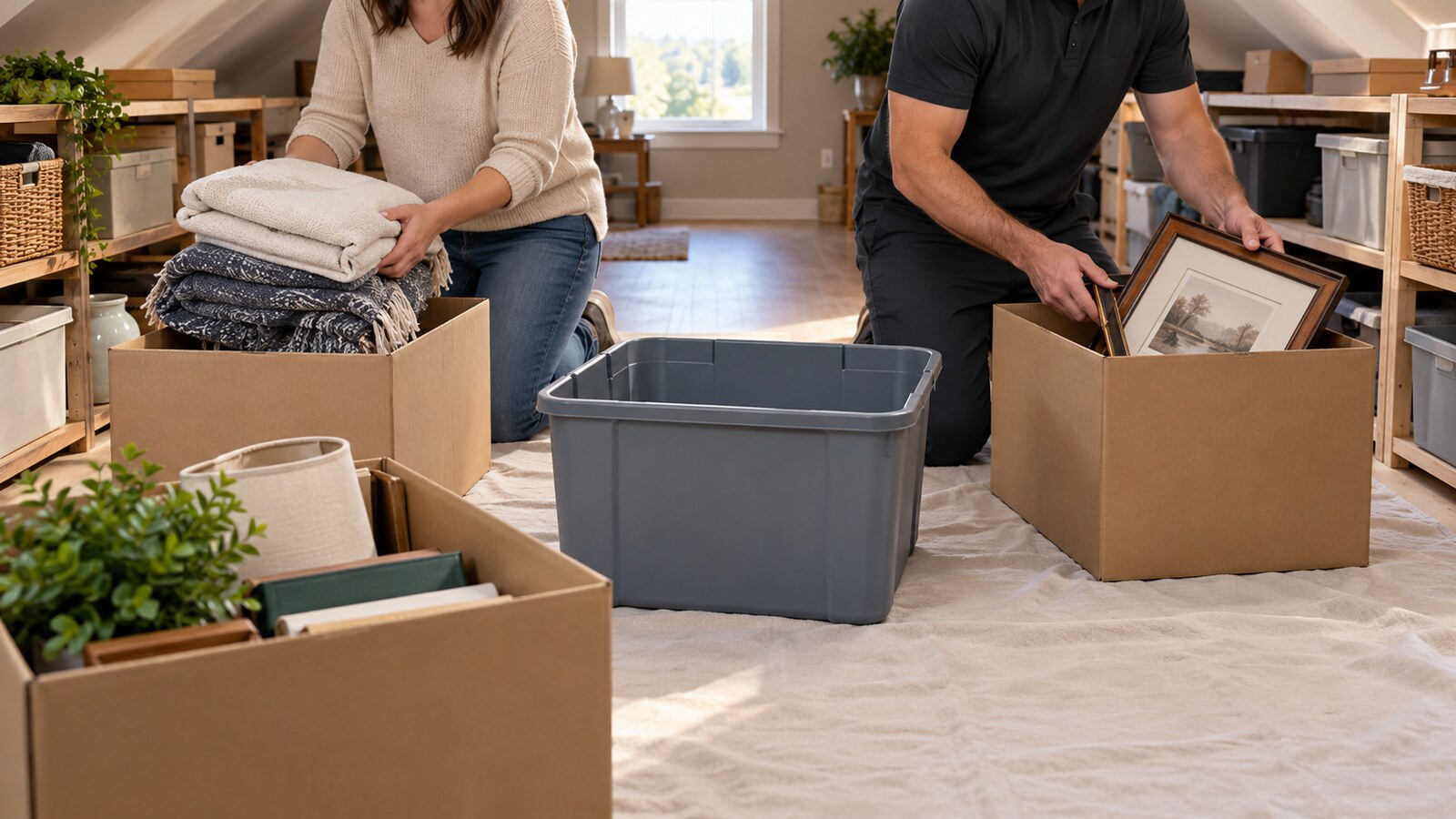
Handle boxes and totes carefully
Cardboard stored through humid summers and cold winters may be weaker than it appears. Support boxes from underneath and transfer loose contents into sound containers rather than trusting softened tape or bowed bottoms. Do not overfill replacement totes; a container that is manageable on the attic floor can become unsafe on stairs.
Keep loads modest, use two people for bulky items and maintain three points of contact where the stair design requires it. Never throw items through a hatch or down a staircase. If an object cannot move through the opening without force, pause and choose a safer method.
Keep special-handling material out of the ordinary load
Attics sometimes contain old paint, fuel containers, propane cylinders, automotive fluids, fluorescent lamps, damaged batteries, unknown chemicals or pest-contaminated material. These do not belong in an ordinary household junk load. Leave containers closed, separate the area and arrange the correct municipal or specialized handling route.
Large appliances, refrigerant equipment, heavy safes and construction debris also need to be identified before scheduling. Accurate photos and a clear inventory help confirm what can be handled within the service scope.
Respect insulation, wiring and ventilation
Stored belongings should not be pulled from behind insulation or moved across exposed framing. Avoid compressing insulation, covering vents, shifting baffles or placing weight on electrical cables. Do not use ordinary household cleaning equipment on loose insulation or unknown dust.
If removal reveals staining, moisture, pest activity or damaged building components, photograph the condition and stop work around it. A cleanout can expose an issue, but it does not diagnose or repair the roof, ventilation, structure or electrical system.
Stage removal at the attic doorway
A small staging zone near the stair opening reduces unnecessary traffic. Bring one manageable item to the doorway, confirm that the stairs are clear, then carry it along the protected route. Do not create a stack that blocks the exit or narrows the landing.
Where more than one person is working, use a simple handoff and keep communication clear. Only one carrier should be on a narrow stair section at a time. Break down clean empty boxes only in a stable work area, away from the access opening.
Clean only safe, finished surfaces
After sorting and removal, collect small loose debris by hand and vacuum only stable, accessible finished flooring or shelving with suitable equipment. Work from the far end toward the exit so the path remains open. Use a lightly damp cloth on compatible finished surfaces rather than introducing unnecessary moisture.
Do not reach behind insulation, disturb settled unknown material or clean exposed electrical components. The goal is a neat storage area and clear walking surface, not cosmetic treatment of unfinished building assemblies.
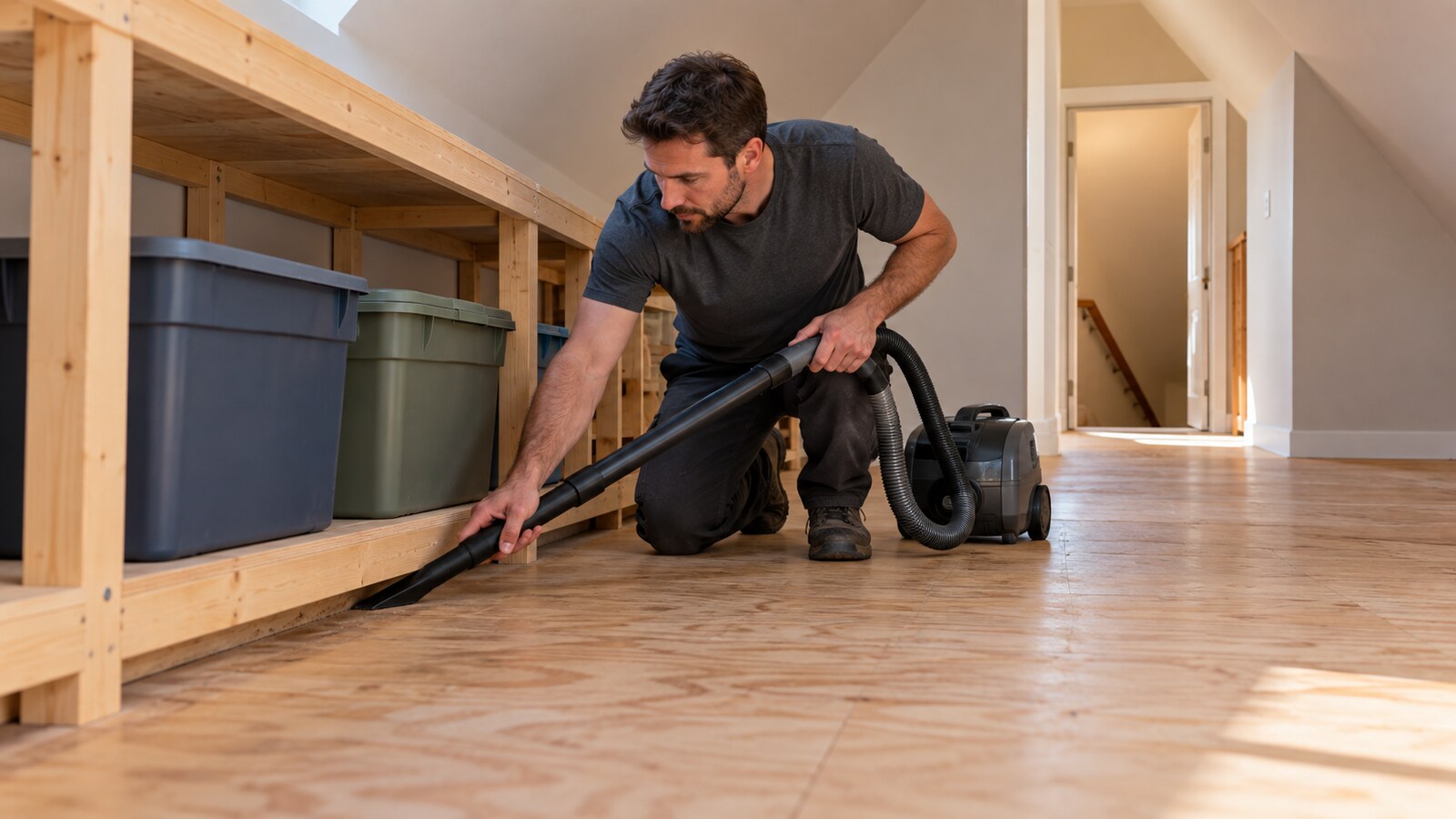
Reset storage for photos and inspections
Group the few remaining items neatly on sound shelving or within the agreed storage boundary. Keep the access path, light switch, vents and visible mechanical components unobstructed. Use simple outward-facing labels that help the seller identify contents without opening every tote.
Before leaving, check the stairs, landing and hallway for dropped fasteners, cardboard scraps or dust. Confirm that the attic light is off, the access door or hatch closes properly, and nothing has been left on the travel route.
Ottawa attic cleanout checklist
- Confirm safe stairs, lighting, head clearance and finished walking surfaces.
- Stop for unstable flooring, loose insulation, pests, mould, leaks or damaged wiring.
- Decide what stays, moves, donates, recycles or requires ordinary removal.
- Review boxes for documents, valuables and special-handling material.
- Protect the full route from the attic to the loading point.
- Use sound containers that fit the opening and remain manageable on stairs.
- Keep hazardous, unknown and regulated material out of the ordinary load.
- Maintain a clear exit and stage only one manageable item at a time.
- Clean only stable, accessible finished flooring and shelving.
- Leave remaining storage grouped neatly without blocking vents or access.
What to send for a firm quote
Send wide photos of the attic, the access stairs or hatch, the walking surface and the route through the home. Add closer photos of bulky items, full shelves and anything whose material is uncertain. Include whether there is parking near the entrance, how many flights are involved and which items must remain.
Mattabo Property Care is fully insured for the services it provides. Readers can send photos, their Ottawa address and deadline for a firm quote. Same-day service is often available but is not guaranteed until Mattabo confirms the appointment. A quote request is not a confirmed booking.
To plan an Ottawa attic cleanout before a sale, [contact Mattabo Property Care](/contact) with clear photos, access details and the desired completion date. A defined scope helps confirm whether the attic and removal route are suitable before an appointment is booked.
Photos are illustrative examples of typical residential service results.