Junk Removal
Ottawa Backyard Shed Cleanout Before Winter: A Practical Plan for Tools, Storage and Ordinary Junk
A practical Ottawa shed-cleanout guide covering tool storage, planters, seasonal equipment, sorting zones, safe access and ordinary non-hazardous junk removal before winter.
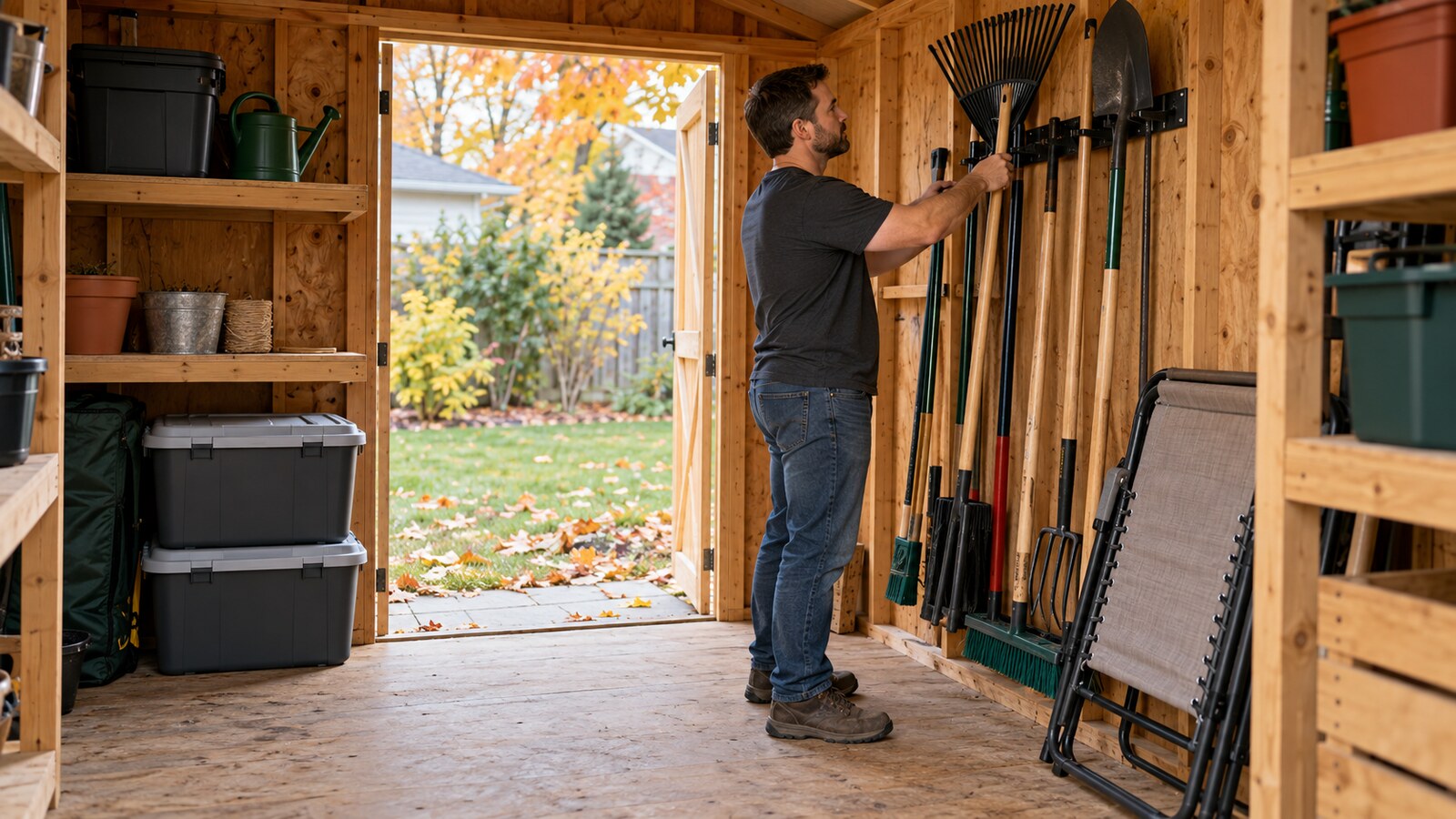
A backyard shed can become the place where seasonal items go when there is no immediate decision to make. Garden tools, planters, hoses, folding chairs, leftover packaging and half-used supplies gradually narrow the walking path. By autumn, the items needed first may be behind everything else, while the shed floor and shelves are difficult to inspect.
A useful shed cleanout is not about emptying the building into one large pile. The practical approach is to define what the shed needs to hold, sort items by destination, keep special-handling materials out of an ordinary junk load, and rebuild the storage layout around safe access. For Ottawa homeowners and property managers, that creates a more manageable space before winter without turning every stored item into a disposal decision.
Decide what the shed must do next
Start with the shed’s purpose. Some sheds mainly hold garden tools and outdoor furniture. Others also store snow equipment, sports gear or property-maintenance supplies. Write down the items that must remain accessible and the floor area that should be clear when the work is complete.
A specific finish line is more useful than “clean out the shed.” For example: keep the long-handled tools on one wall, place winter equipment near the door, retain two labelled storage totes, move cushions indoors, remove approved broken plastic items and leave the centre aisle open. This protects useful belongings and gives the cleanout a clear stopping point.
Inspect the structure and contents before moving anything
Open the door fully and look at the floor, shelves, walls and roof line before shifting heavy items. Note sagging shelves, loose fasteners, water staining, soft flooring, damaged wiring, animal activity or anything that could affect safe access. A cleanout should not treat a structural, electrical or pest issue as ordinary tidying.
Do not reach blindly behind stacked items. Use good lighting and identify sharp tools, unstable containers and heavy planters first. If there are leaking products, unknown chemicals, fuel, pressurized cylinders, significant mould, sharps or another hazardous condition, stop ordinary clean-up and arrange appropriate specialist handling.
Create sorting zones outside the shed
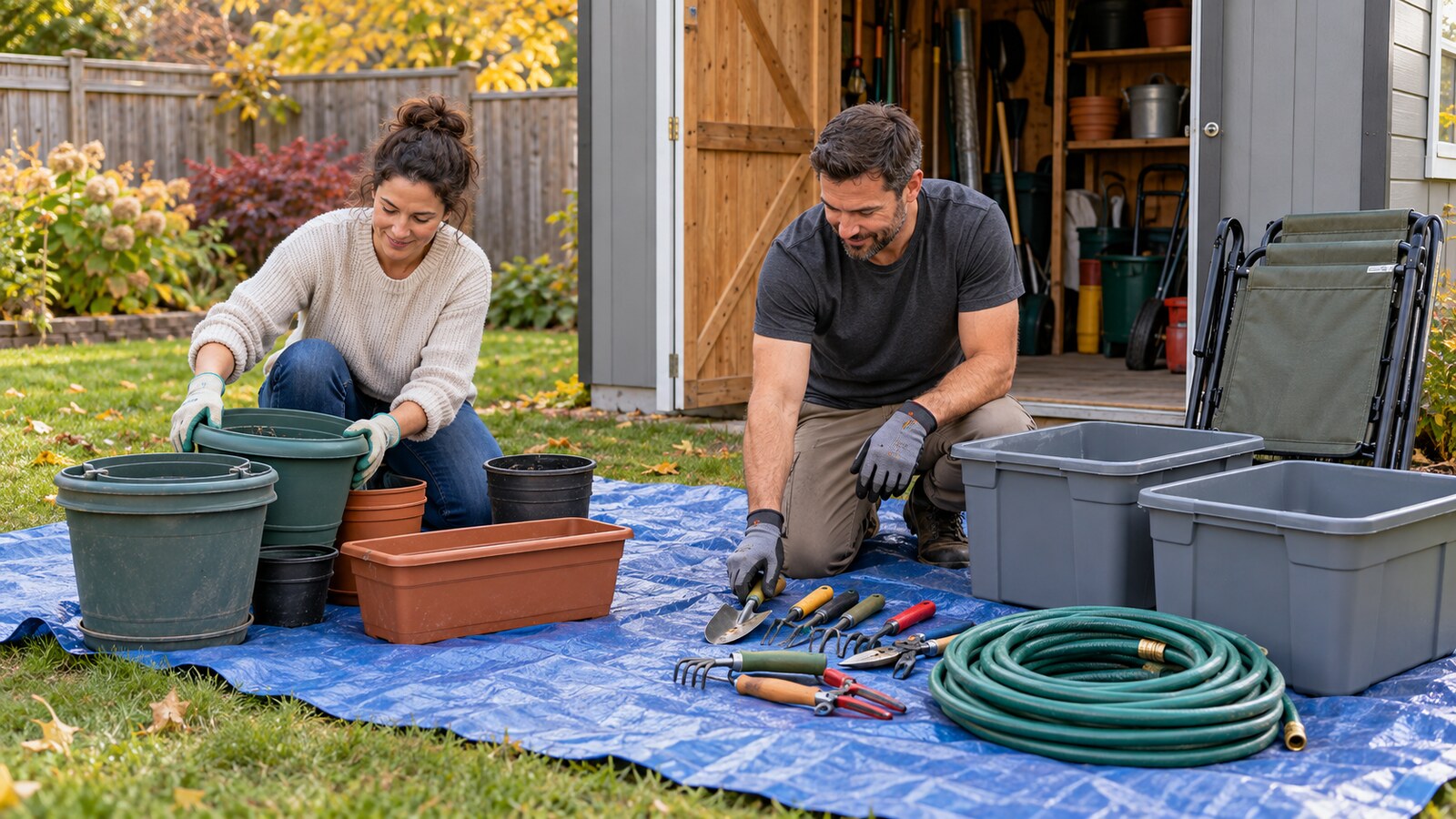
Use a tarp or other suitable protected area near the door and create separate groups: keep in the shed, relocate to the house or garage, donate or reuse, ordinary non-hazardous removal, and special handling. Keep enough space between groups that approved removal items cannot be confused with tools or furniture that will stay.
Work from the doorway inward and make obvious decisions first. Empty cardboard, cracked lightweight planters and clearly broken plastic accessories are often simpler than power equipment, tools or sealed containers. As the aisle opens, larger items can be assessed without repeated lifting.
Handle tools as equipment, not loose clutter
Long-handled tools should be checked for loose heads, damaged handles and soil before they are placed back into a rack. Keep heavier tools low and avoid leaning several items where they can slide into the aisle. Small hand tools are easier to manage in a bin, drawer or stable shelf container.
Bladed or pointed tools need deliberate handling. Use guards or appropriate storage where available, keep cutting edges away from hands and walking routes, and never place loose sharp items into an ordinary removal bag. Tools that are being kept should be returned only after their storage location is ready.
Sort planters, hoses and seasonal items
Empty planters can be nested when their material and shape allow it, but cracked containers may fail when lifted or stacked. Check for wet soil, stones or hidden water before moving any planter. Living plants, loose soil and gardening products should be handled separately from ordinary household junk.
Drain and coil a garden hose without forcing tight bends, then place it where fittings will not be crushed. Dry outdoor cushions before indoor storage and brush off loose debris outside. Folding chairs and small furniture should be cleaned enough that soil and leaves are not transferred into the home, garage or locker.
For mowers, trimmers, blowers and other equipment, follow the owner’s manual and the owner’s approved seasonal-storage process. A property cleanout should not drain fuel, disconnect batteries, service engines or guess at equipment maintenance unless that work is specifically assigned to a qualified provider.
Empty and test shelves before loading them again
A shelf can look stable until weight is removed or shifted. Empty one section at a time, check brackets and fasteners, and set aside anything loose or damaged for repair. Do not rebuild a storage wall on a shelf that is sagging or pulling away from the shed frame.
Place heavier containers on lower shelves and lighter, less frequently used items higher up. Keep labels facing outward only if they do not expose private information. Clear bins can make contents easier to identify, while opaque containers may suit items that should be protected from light; the main requirement is that containers are sound, dry and stable.
Keep special-handling items separate
Paint, solvents, fuels, pesticides, fertilizers, pressurized cylinders, loose batteries, unknown liquids and leaking containers are not ordinary non-hazardous junk. Keep products in their original labelled containers when possible, do not mix substances, and use the appropriate current disposal or return option for each material.
The same caution applies to electronics, lamps, sharp metal, broken glass and unusually heavy objects. Identify these items before the removal appointment and photograph them separately. Clear information helps determine what is eligible for the planned work and what needs another provider or destination.
Plan the removal route before loading
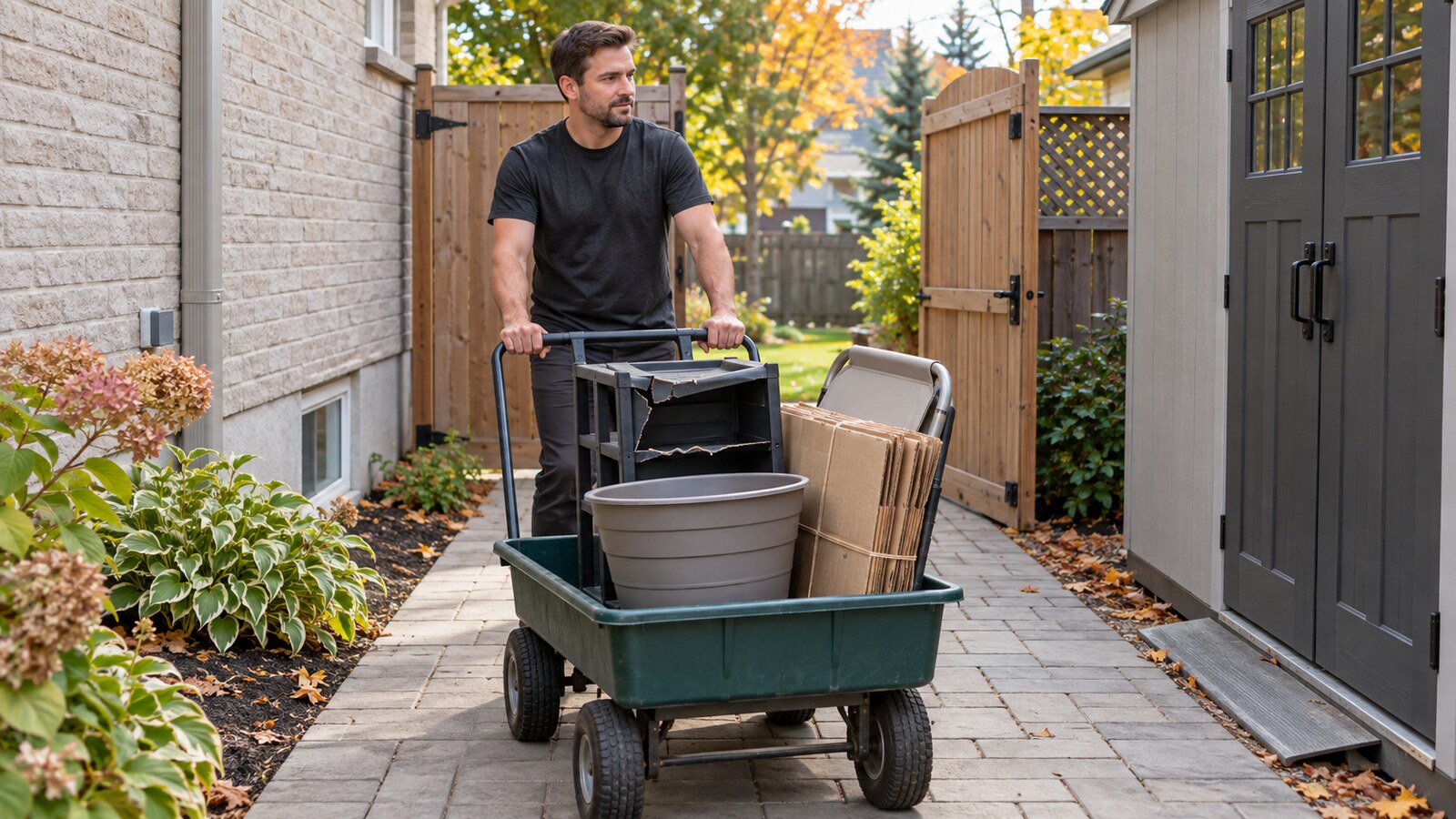
Measure the shed doorway and check the route to the driveway or loading point. Gates, steps, soft ground, narrow side yards and low branches can change how an item should be carried. Move hoses, toys and garden decor out of the path before work begins.
Use manageable, stable loads. Flattened cardboard should be bundled, small items contained and lightweight furniture folded as designed. Do not overload a cart or allow broken edges and tool handles to protrude into the walking route. Keep children and pets away from the active work area.
Clean and reset the shed after sorting
Once the outgoing items are removed, collect dry leaves, cobwebs and loose debris from shelves and the floor. Work from higher surfaces downward, then sweep or vacuum using a method suitable for the shed. Avoid washing a floor or wall if water cannot drain safely or the structure shows moisture damage.
Return keep items by category and frequency of use. Place winter equipment where it can be reached without unloading the shed, keep the centre aisle open and leave access to windows, vents, electrical panels or maintenance points. Photograph the finished layout so other household members or property staff know where items belong.
Backyard shed cleanout checklist
- Define what the shed must hold and what needs to stay accessible.
- Inspect the floor, shelves, walls and contents before moving stacks.
- Create keep, relocate, donate, ordinary removal and special-handling zones.
- Open the aisle from the doorway inward.
- Store long-handled and sharp tools securely.
- Check planters, hoses, cushions and seasonal equipment separately.
- Keep chemicals, fuels, batteries and unknown materials out of the ordinary load.
- Clear and measure the route to the loading point.
- Use stable containers and place heavier items low.
- Finish by cleaning dry debris and rebuilding an open centre aisle.
What to send for a firm quote
Send one wide photo from the shed doorway, closer photos of each shelf and floor area, and clear images of the route to the driveway or loading point. Include gates, steps, long carries, parking limits and any items that are large, unusually heavy or uncertain. Keep special-handling materials visible and separate in the photos.
Mattabo Property Care is fully insured for the services it provides. Readers can send photos, their Ottawa address and deadline for a firm quote. Same-day service is often available but is not guaranteed until Mattabo confirms the appointment. A quote request is not a confirmed booking.
To plan an Ottawa backyard shed cleanout, [contact Mattabo Property Care](/contact) with the photos, approved ordinary non-hazardous removal items, access details and desired timing. A clear scope helps Mattabo assess sorting, carrying distance and eligible removal before the appointment is confirmed.
Photos are illustrative examples of typical residential service results.