Pressure Washing
Pressure Washing Exterior Basement Walkout Stairs in Ottawa: A Practical Drainage-Safe Guide
A practical Ottawa guide to pressure washing exterior basement walkout stairs, with careful planning for drains, thresholds, railings, concrete edges and controlled water flow.
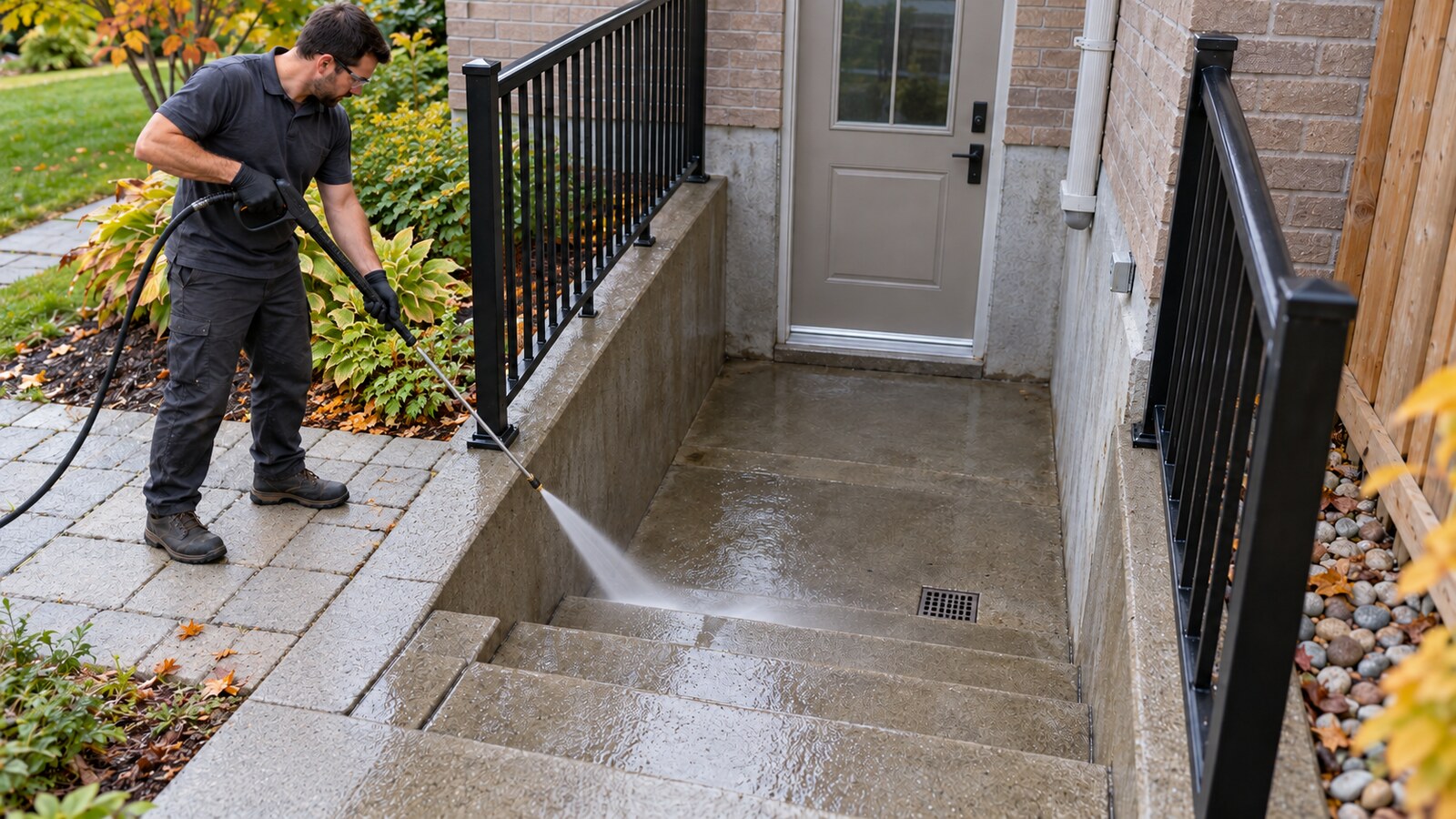
Exterior basement walkout stairs collect more than ordinary surface dirt. Leaves settle in corners, grit gathers along step edges, splashback marks the lower walls and water naturally moves toward the lowest landing. Unlike an open driveway or patio, a walkout is a contained space with a door, threshold, drain, railings and foundation surfaces close together.
That layout makes planning more important than power. A useful pressure-washing job protects the entry, confirms where water can go, matches the cleaning method to each surface and keeps the walking route controlled. For Ottawa homeowners and property managers, the goal is a cleaner, safer-to-manage access area without forcing water toward the basement door or treating every material like bare concrete.
Start with a dry inspection
Remove loose leaves and movable items while the stairs are dry. Check the treads, risers, side walls, upper landing and bottom landing from more than one angle. Look for loose concrete, open cracks, flaking coatings, damaged caulking, unstable railings or any condition that could change how the area should be cleaned.
Do not begin pressure washing if the steps or railings are unsafe to use. Structural movement, a loose handrail, damaged electrical equipment, significant mould, unknown residue or a drain that is already backing up should be assessed before routine exterior cleaning continues.
Inspect the drain and lower landing first
Locate the drain before introducing water. Remove loose leaves and surface debris by hand or with a brush, then check whether the grate is secure and the visible opening is unobstructed. A pressure washer is not a drain-clearing tool. Do not force debris, sediment or a concentrated jet into the drain.
Look at the slope of the lower landing and note any low spots where water could remain. Check the door threshold, bottom weather seal and nearby joints. If water already pools against the door during an ordinary hose test or rainfall, cleaning should not proceed as though drainage is normal.
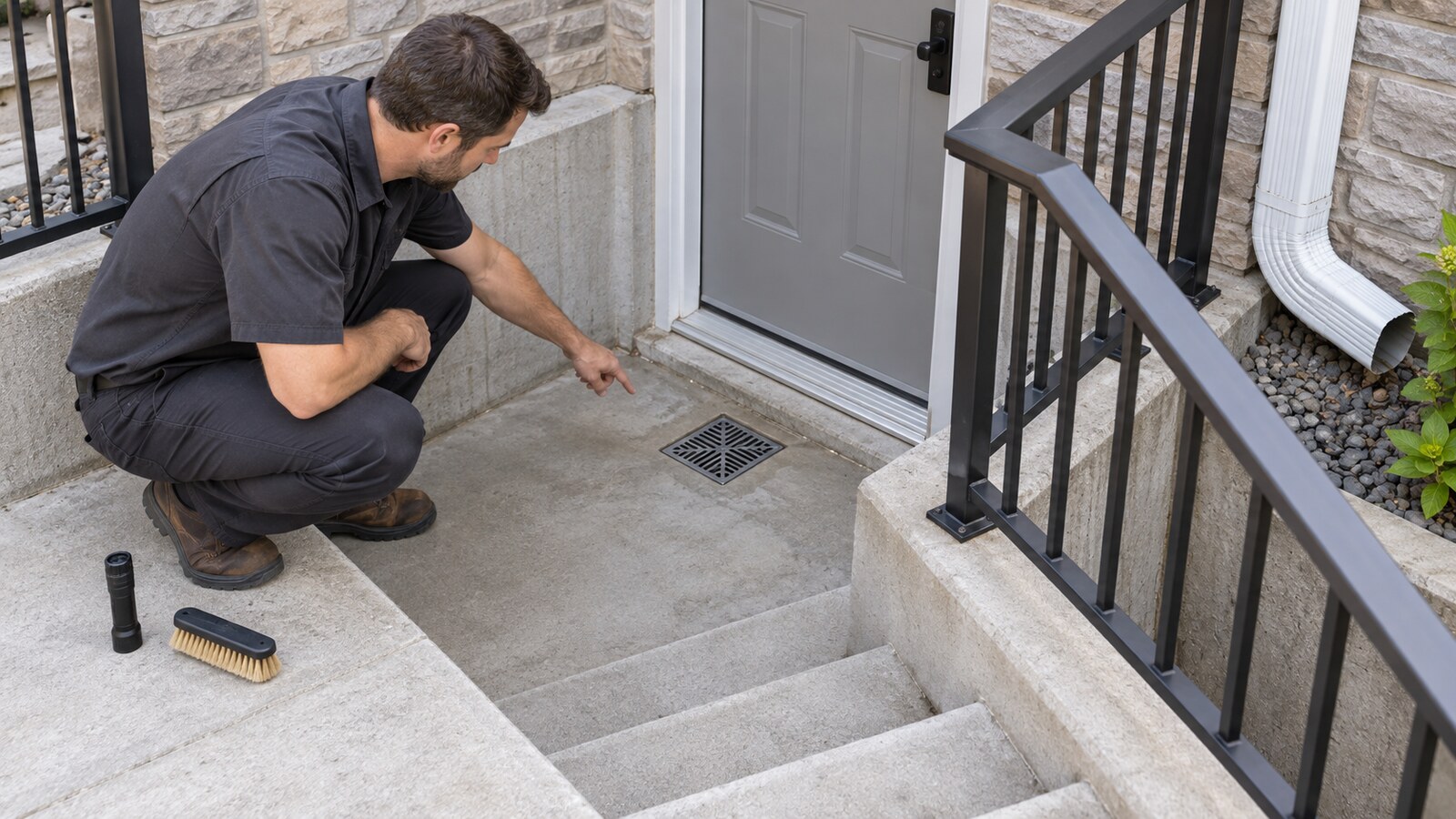
Protect the basement door and threshold
Keep the exterior door closed and confirm that it latches properly. Remove mats and objects that hold moisture against the threshold. Where suitable, use controlled splash protection that does not block the drain or create a trip hazard.
Never direct a pressure-washing jet at the door gap, weather seal, lockset or threshold joint. These components are designed to manage normal exterior exposure, not concentrated water under pressure. Clean near them with reduced force, greater distance or a manual method appropriate to the material.
Identify each surface before choosing a method
Walkout stairs may combine poured concrete, masonry, coated surfaces, metal railings, painted trim, vinyl, wood and stone. The method suitable for a sound concrete tread may damage a coating, loosen mortar, strip paint or mark softer materials.
Test a small, inconspicuous area with the least aggressive effective approach. Increase force only when the surface condition supports it. Cleaning distance, spray angle, nozzle choice, water volume and dwell time all affect the result; pressure alone is not a quality measure.
Clear the work area and route hoses safely
Move planters, storage bins, tools, footwear and decorations out of the walkout. Keep the upper approach open so the operator can work from stable ground. Children, pets and other people should stay away from the active area.
Route hoses where they will not cross the stair path or pull against railing posts. Avoid sharp bends at the top landing and do not allow a hose to rest against the door. The operator should not stand on wet stairs while directing high-pressure water below.
Pre-clean corners and step edges
Sweep or vacuum loose dry material before washing. A soft or medium brush can free leaves and grit from railing bases, wall joints and tread corners without sending debris directly into the drain.
This step reduces the amount of solid material in the rinse water and makes surface staining easier to assess. It also exposes cracks, loose coatings and damaged edges that may have been hidden by dirt.
Work in small, controlled sections
Begin at a location that lets water move toward the intended collection point without crossing a freshly cleaned walking surface. Use consistent passes and keep the wand moving. Overlapping slightly is better than holding the spray in one place.
Clean step treads and risers deliberately. Avoid cutting a narrow bright line into the surface or leaving alternating stripes. Near walls, rails and the door, reduce force and control the spray fan so water does not rebound into joints or under trim.
Treat railings and anchor points separately
Metal railings can collect dirt around posts and mounting plates, but high pressure at close range may affect coatings or drive water into fastener points. Inspect for rust, loose hardware and movement before cleaning.
Use a gentler method around railing bases, then rinse without forcing water into the anchors. If a railing moves when lightly checked, stop and arrange repair. Cleaning should never be used to mask a loose or deteriorated connection.
Keep foundation walls and joints in view
Splashback can mark the foundation wall beside the stairs. Clean only the accessible sound surface and avoid concentrating water at cracks, vents, service penetrations or the joint where the walkout meets the home.
Do not aim upward under siding, trim or flashing. If the wall shows active water entry, crumbling material or an unknown coating, the condition should be assessed before pressure washing.
Control the final rinse and standing water
Use a controlled rinse that carries remaining grit toward the drain without flooding the lower landing. Watch the water as it moves. If it slows, pools or rises around the grate, stop adding water and reassess the drainage.
A clean floor squeegee can help guide a shallow film of water toward a functioning drain. Keep water away from the threshold and do not push leaves or heavy sediment into the opening. Collect solids separately.
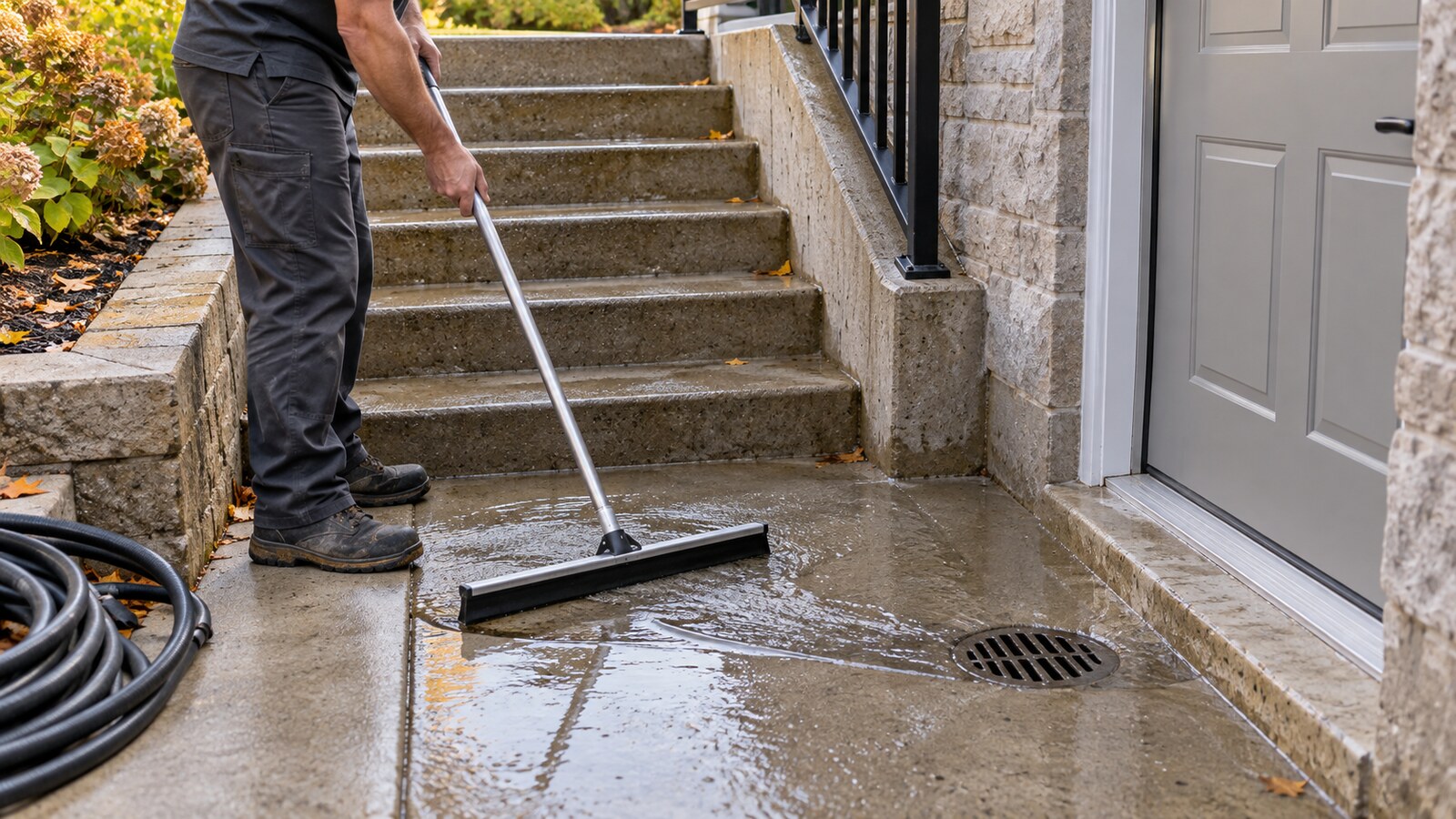
Check the area as it dries
After rinsing, inspect the tread edges, lower landing, walls and threshold while surfaces are still damp. Look for missed debris, uneven cleaning, standing water or water trapped beside railing posts. A final inspection is more useful than repeated aggressive passes.
Allow the area to dry before returning mats, planters or storage. Do not use the stairs while they are visibly wet unless necessary and safe. If temperatures may fall below freezing before surfaces can dry, postpone the work rather than leave water on steps and landings.
Know what pressure washing will not fix
Cleaning can remove suitable surface dirt and organic buildup, but it does not repair drainage, cracks, loose concrete, failing coatings, damaged seals or unstable railings. These conditions require the appropriate trade or property-maintenance response.
Dark marks may also come from material changes, rust, efflorescence, worn coatings or previous repairs rather than removable dirt. A careful test area helps set realistic expectations before the full walkout is cleaned.
Basement walkout pressure-washing checklist
- Inspect the stairs, landings, railings and walls while dry.
- Confirm the drain grate is secure and the visible opening is clear.
- Check whether water slopes away from the basement door.
- Remove loose debris before introducing water.
- Keep the door closed and protect the threshold from concentrated spray.
- Identify concrete, coatings, masonry, metal and trim separately.
- Test the least aggressive effective method in a small area.
- Route hoses away from the stair path and railing posts.
- Work in controlled sections without standing on wet stairs.
- Stop rinsing if water pools or rises around the drain.
- Guide shallow water with a clean squeegee and collect solids separately.
- Allow the walkout to dry before returning mats or stored items.
What to send for a firm quote
Send wide photos from the top and bottom of the walkout, plus closer images of the drain, threshold, railings, step edges and any coatings or damaged areas. Include the number of steps, the route from the driveway, hose access, gates and any parking limits. Photograph unknown residue or drainage concerns separately.
Mattabo Property Care is fully insured for the services it provides. Readers can send photos, their Ottawa address and deadline for a firm quote. Same-day service is often available but is not guaranteed until Mattabo confirms the appointment. A quote request is not a confirmed booking.
To plan pressure washing for an Ottawa basement walkout, [contact Mattabo Property Care](/contact) with clear photos, access details and desired timing. A defined scope helps confirm whether the surfaces and drainage are suitable before the appointment is booked.
Photos are illustrative examples of typical residential service results.