Home Organization
Ottawa Home Office Cleanout: A Practical Plan for Furniture, Paper and Electronics
A practical Ottawa guide to clearing a home office while protecting important records, sorting electronics and planning safe furniture removal.
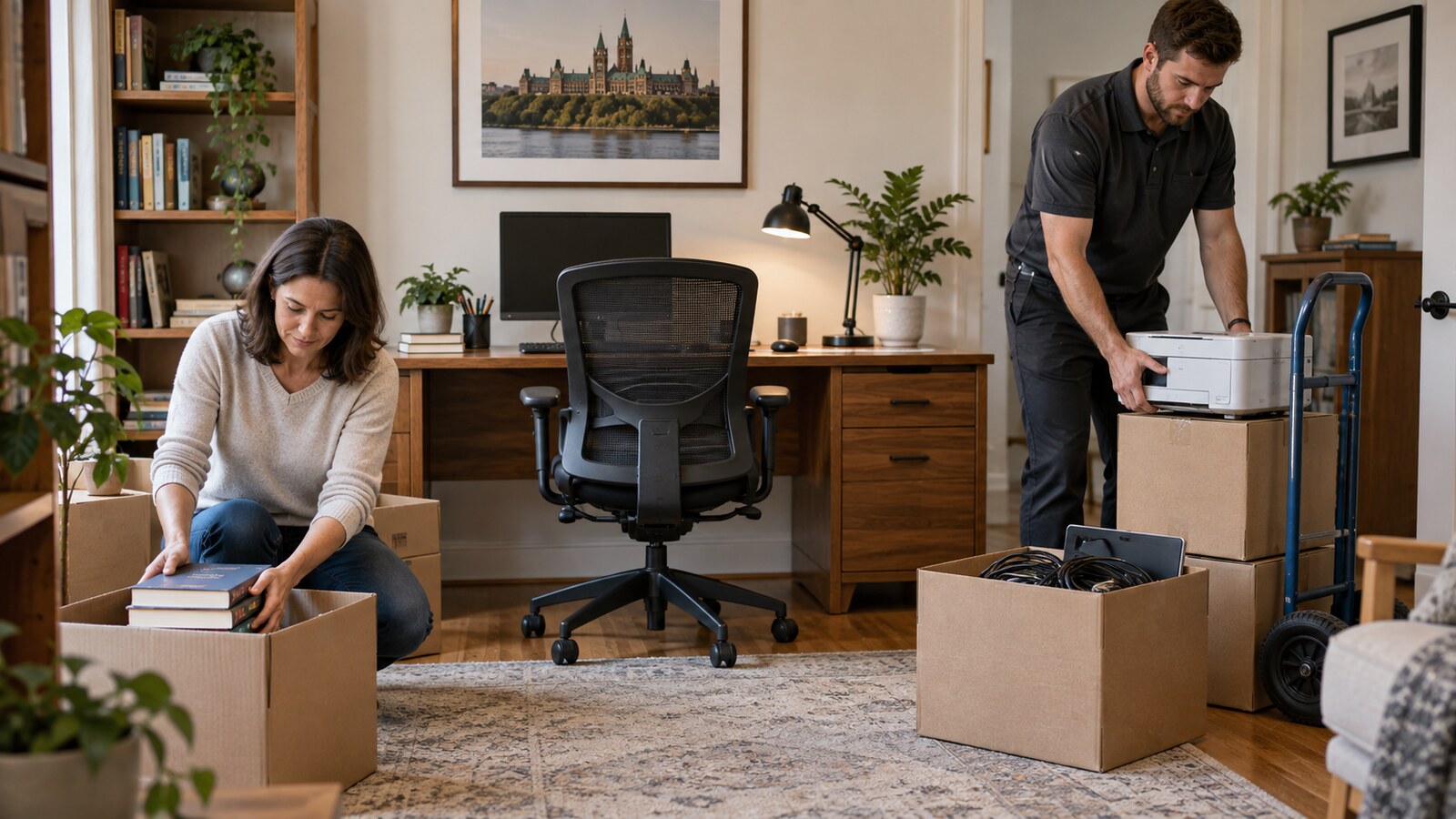
A home office can look like a small room but behave like several projects at once. Paper records, personal information, employer-owned equipment, cables, electronics, books and bulky furniture all need different decisions. When a move, renovation, sale or return to shared living space creates a deadline, rushing everything into boxes can leave important records exposed and make the eventual removal harder.
A useful Ottawa home-office cleanout starts with decisions the homeowner must make, then moves to ordinary non-hazardous sorting, furniture handling and a final room reset. The goal is not to empty the room at any cost. It is to clear it without losing information, mixing special-handling items into ordinary junk or damaging the route through the home.
Decide what the room needs to become
Start with the next use of the room. It may remain a smaller work area, become a guest room, support a move or need to be completely cleared for painting. That end point determines which desk, chair, storage and technology should stay.
Define the physical scope as well. Include the desk, bookcases, filing cabinets, closet shelves and any boxes stored elsewhere in the home that belong to the office. Identify items that are not part of the cleanout, such as family records, borrowed furniture or equipment owned by an employer.
Take wide photos before moving anything. They make it easier to discuss the volume of furniture, the access route and the ordinary removal scope. Close-up photos can document model numbers or cable connections, but keep confidential documents and screens out of images sent for quoting.
Make decisions before filling removal bags
Use clear groups: keep in the office, move elsewhere in the home, return to an employer, donate, ordinary non-hazardous removal and special handling. Plain containers or temporary notes can help during the sort, but each person who owns records or devices should approve the final destination.
Work from obvious items toward sensitive ones. Empty packaging, worn folders and clearly unwanted decor are usually easier to decide than tax records, contracts or old computers. Early progress creates working space without forcing a rushed decision about something important.
Protect records, accounts and personal information
Paper should be reviewed by the person responsible for it. Separate active records, material that must be archived, papers intended for secure shredding and ordinary non-confidential recycling. Do not place readable financial, medical, identity or employment documents in an open ordinary-removal container.
Apply the same caution to digital information. Computers, phones, external drives, memory cards and some printers may retain data. Back up needed files, sign out of accounts and follow the device owner’s or employer’s approved process before a device leaves the room. An ordinary property clean-up is not a substitute for certified data destruction.
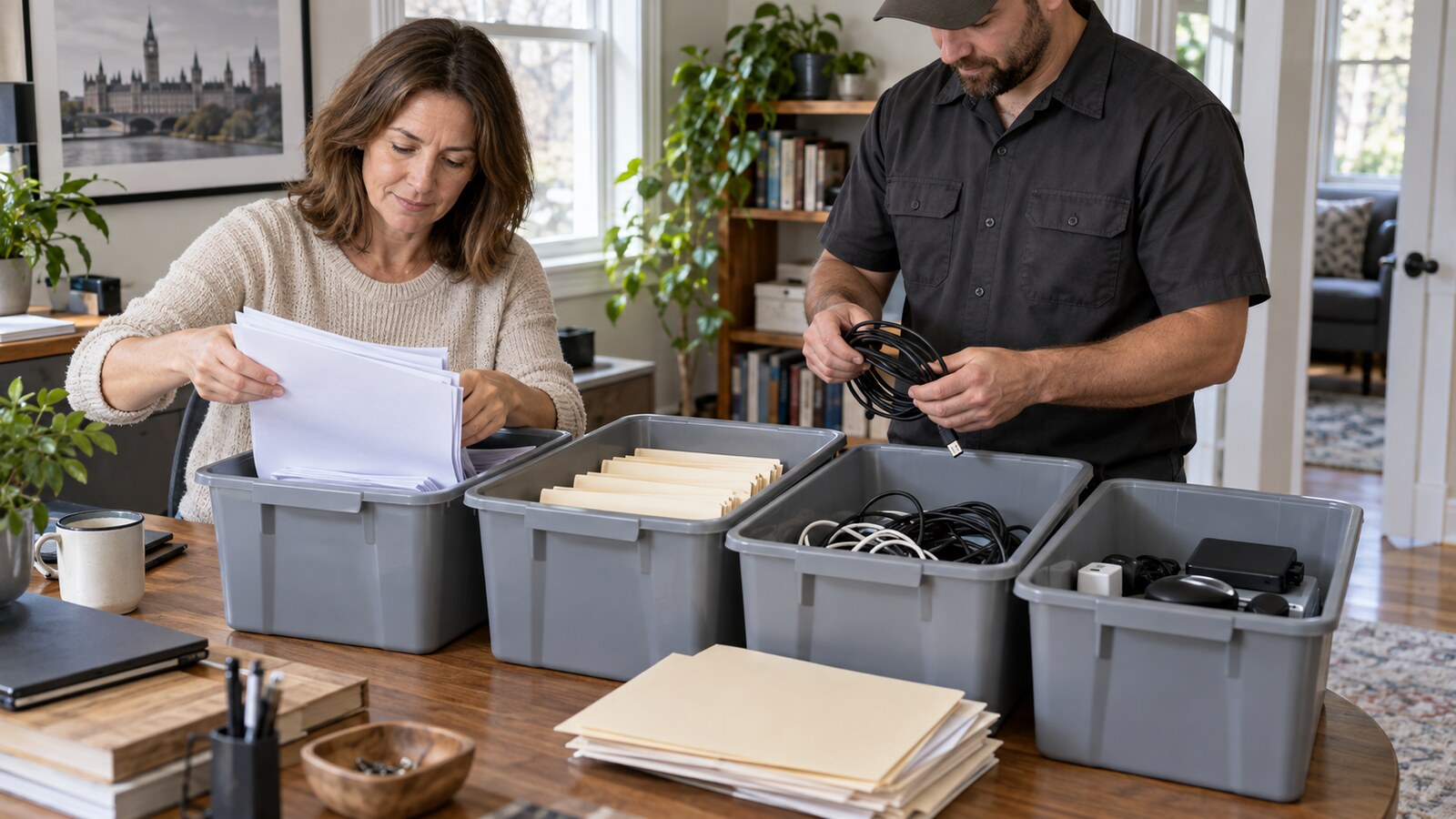
Keep keys, access cards, security tokens, blank cheques and password records with the homeowner rather than in a general sorting bin. If ownership is uncertain, set the item aside for confirmation. A slower decision is safer than removing something that cannot be recovered.
Sort electronics and accessories by destination
Match laptops, monitors, keyboards, power adapters and docking equipment before separating cables. A quick photo of the connected setup can make reassembly easier. Coil usable cords without sharp bends and keep small adapters with the device they belong to.
Electronics, loose batteries, toner cartridges and some lamps do not belong in an ordinary junk load. Set them apart in stable containers and choose a current, appropriate reuse or disposal option for the specific item. Do not pack swollen batteries, leaking devices, unknown liquids or damaged electrical components with ordinary household contents.
Remove personal data and ownership stickers only after any return requirements have been checked. Employer-owned or leased equipment should be handled according to the owner’s instructions, even if it appears obsolete.
Choose what happens to the furniture
Check the condition and future usefulness of desks, chairs, cabinets and shelves. A sound adjustable chair may be worth moving to another room, while a damaged particleboard desk may not tolerate disassembly and reassembly. Donation is only practical when an item is clean, complete and accepted by the intended recipient.
Empty every drawer before moving a piece. Filing cabinets and desks become unexpectedly heavy when contents remain inside, and loose drawers can shift on stairs. Check for keys, hidden cable trays and fasteners before deciding how the item will travel.
Plan the furniture and access route
Measure the furniture, doorway, hallway turns and stair width before work begins. In a condo, also confirm elevator dimensions, booking requirements, loading access and any protection the building requires. A piece that fits through the office door may still fail at a landing or tight entrance.
Disassemble furniture only where it was designed to come apart. Keep hardware together and identify parts that will be reassembled. Do not force glued joints or unstable components. Clear rugs, small tables and cords from the route, protect vulnerable flooring and keep children and pets away from the work area.
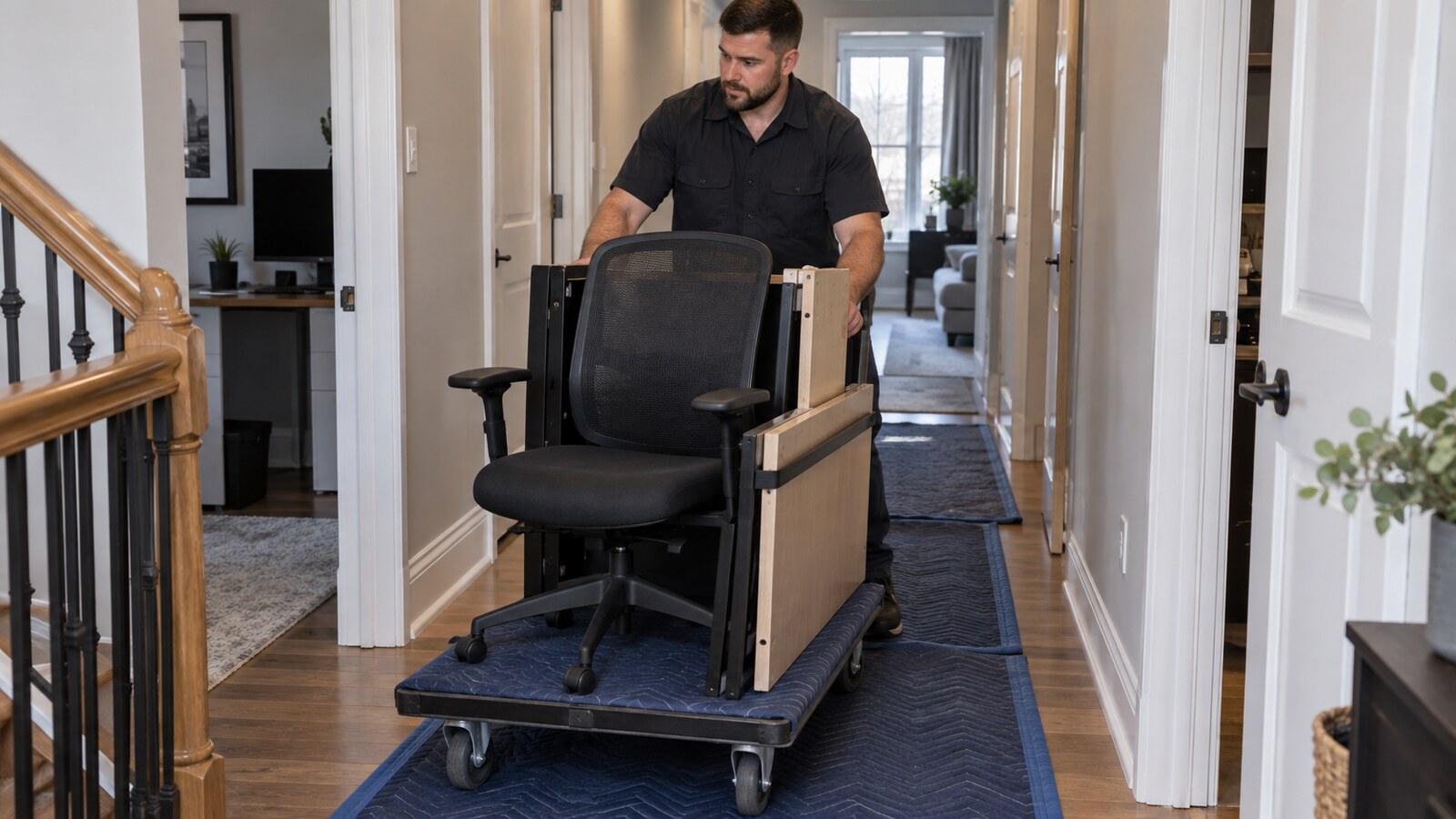
Access affects the quote and schedule. Mention stairs, long carries, street parking, narrow doors and elevator windows when sending photos. If a cabinet, desk or safe is unusually heavy, provide dimensions and any known product information so the scope can be assessed before arrival.
Clear the room in a useful order
Once sensitive material is secured, move reusable items to their approved destination and remove ordinary loose contents. Furniture can follow after pathways are open. This order reduces handling and prevents boxes from blocking the route for larger pieces.
Keep special-handling items visibly separate throughout the job. Paint, chemicals, pressurized cylinders, unknown substances, sharps, biological material and hazardous waste are outside an ordinary non-hazardous cleanout and should be directed to an appropriate provider or facility.
Finish by checking shelves, drawers, cable channels, wall outlets and the space behind furniture. Dust high surfaces first, then vacuum or clean the floor using a method suitable for its material. Note wall damage, loose outlets or flooring issues that need a qualified trade rather than covering them with new furniture.
Home-office cleanout checklist
- Confirm the room’s next use and the deadline.
- Identify employer-owned, leased, borrowed or confidential items.
- Separate active records, archives and secure-shredding material.
- Back up and prepare devices before they leave the room.
- Match adapters and accessories to the correct electronics.
- Set batteries, toner and special-handling items apart.
- Empty drawers and cabinets before furniture is moved.
- Measure doorways, hallways, stairs and elevators.
- Create keep, relocate, donate, ordinary removal and special-handling groups.
- Complete a final shelf, drawer, outlet and floor check.
What to send for a firm quote
Send wide photos of the office, furniture and access route. Include the floor level, stairs or elevator details, parking or loading conditions, the approximate number of boxes, any disassembly needs and which ordinary non-hazardous items are approved for removal. Keep private information out of the photos.
Mattabo Property Care is fully insured for the services it provides.
Same-day service is often available but is not guaranteed until Mattabo confirms the appointment.
Readers can send photos, their Ottawa address and deadline for a firm quote.
A quote request is not a confirmed booking.
Photos are illustrative examples of typical residential service results.