Junk Removal
Ottawa Storage Locker Cleanout: A Practical Plan for Moving, Sorting and Final Handover
A practical Ottawa guide to clearing a residential storage locker safely, sorting ordinary household items and meeting a move or lease deadline.
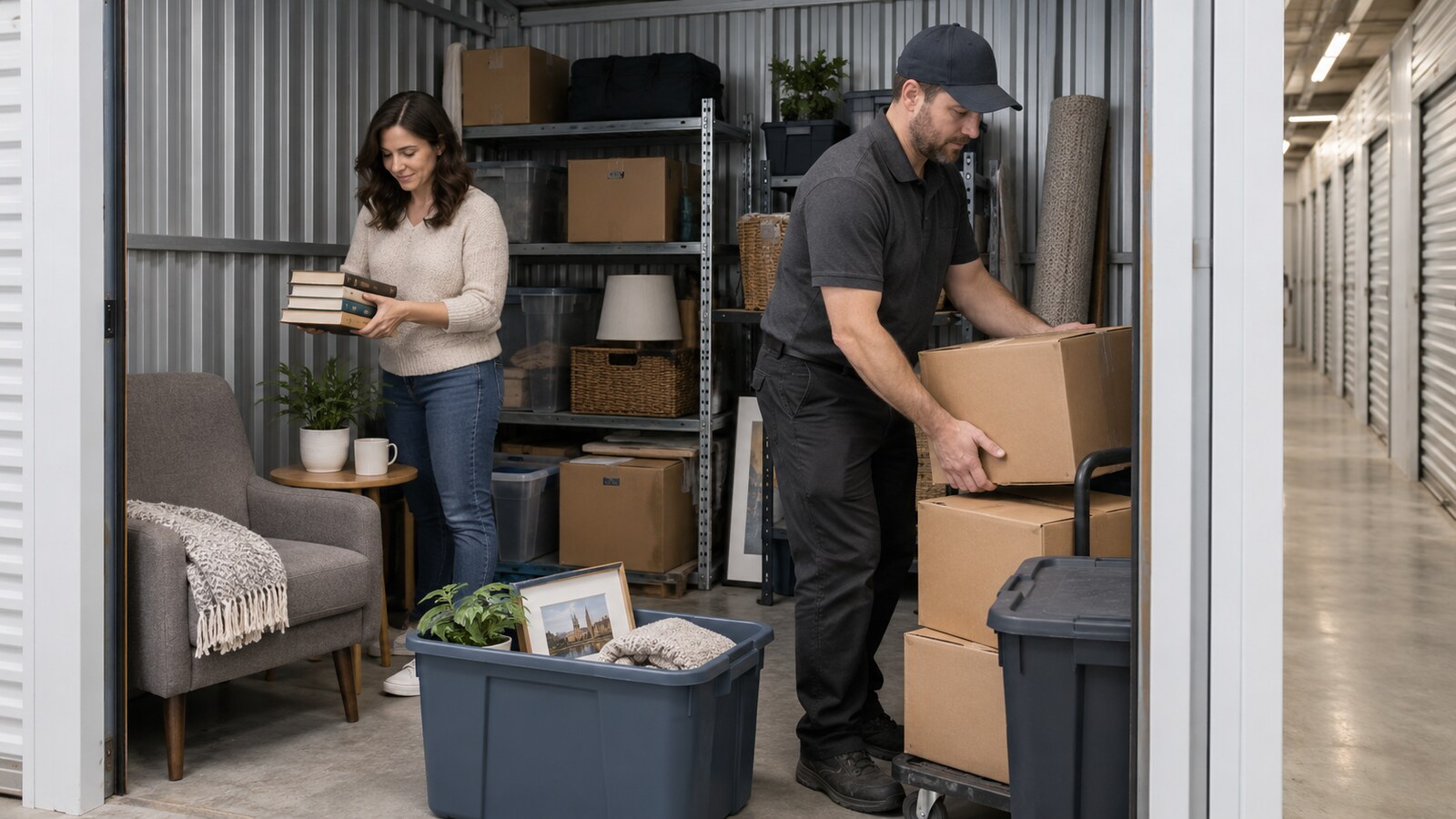
A storage locker can become the final holding place for furniture, moving boxes, seasonal items and decisions that were postponed during a busy move. When a lease end, property sale or facility deadline is approaching, opening the door and starting at random often creates more handling than necessary.
A better Ottawa storage-locker cleanout begins with access, clear destinations and a safe route to the loading area. The goal is not simply to empty the unit. It is to protect anything being kept, separate ordinary non-hazardous removal items, follow the facility’s rules and leave the locker ready for a final check.
Confirm the deadline, access and decision-maker
Start with the exact date and time the locker must be empty. A move-out date on a calendar may not tell you when access ends, when a lock must be removed or whether the office needs to inspect the unit. Confirm those details directly with the storage facility rather than assuming access will remain available until the end of the day.
Identify the person who can make decisions about every item. This matters when a locker belongs to a family member, an estate, a former tenant or more than one household. If the person approving removal will not be onsite, agree in advance on how uncertain items will be photographed and approved. A cleanout can stall quickly when every box requires a separate phone call.
Check the unit number, lock or access code, elevator hours, loading-door procedure and parking instructions. Ask whether carts may be reserved and whether the facility restricts the size or placement of vehicles. These are site-specific operating details, so they should be verified with the facility before the appointment.
Build a quick inventory before moving anything
Take wide photos from the doorway and closer photos of furniture, boxes, shelving and awkward items. Do not climb over unstable piles to improve the picture. The first inventory only needs to show the approximate volume, the largest pieces and anything that may affect the route or equipment.
Note whether boxes are sealed, soft from moisture or too heavy to lift safely. Look for furniture that needs drawers secured, shelves removed or legs protected. Identify items that must travel to a new home separately from items approved for ordinary junk removal.
A few clear measurements can prevent delays. Record the approximate dimensions of large furniture, the locker doorway, any tight corridor turn and the available elevator or loading-door opening. If an item entered the facility in pieces, it may need to leave the same way.
Sort by destination, not by vague categories
Use destinations that lead to an immediate action: keep at home, move to another locker, donate if accepted, recycle through an appropriate program, and remove as ordinary non-hazardous junk. A label such as “decide later” usually creates another pile without solving the deadline.
Keep the groups physically separate and leave the main aisle open. Place small approved removal items together, protect documents and valuables in a clearly controlled container, and avoid mixing donation items with broken or incomplete goods. If a charity or reuse organization is part of the plan, confirm what it currently accepts before counting on that route.
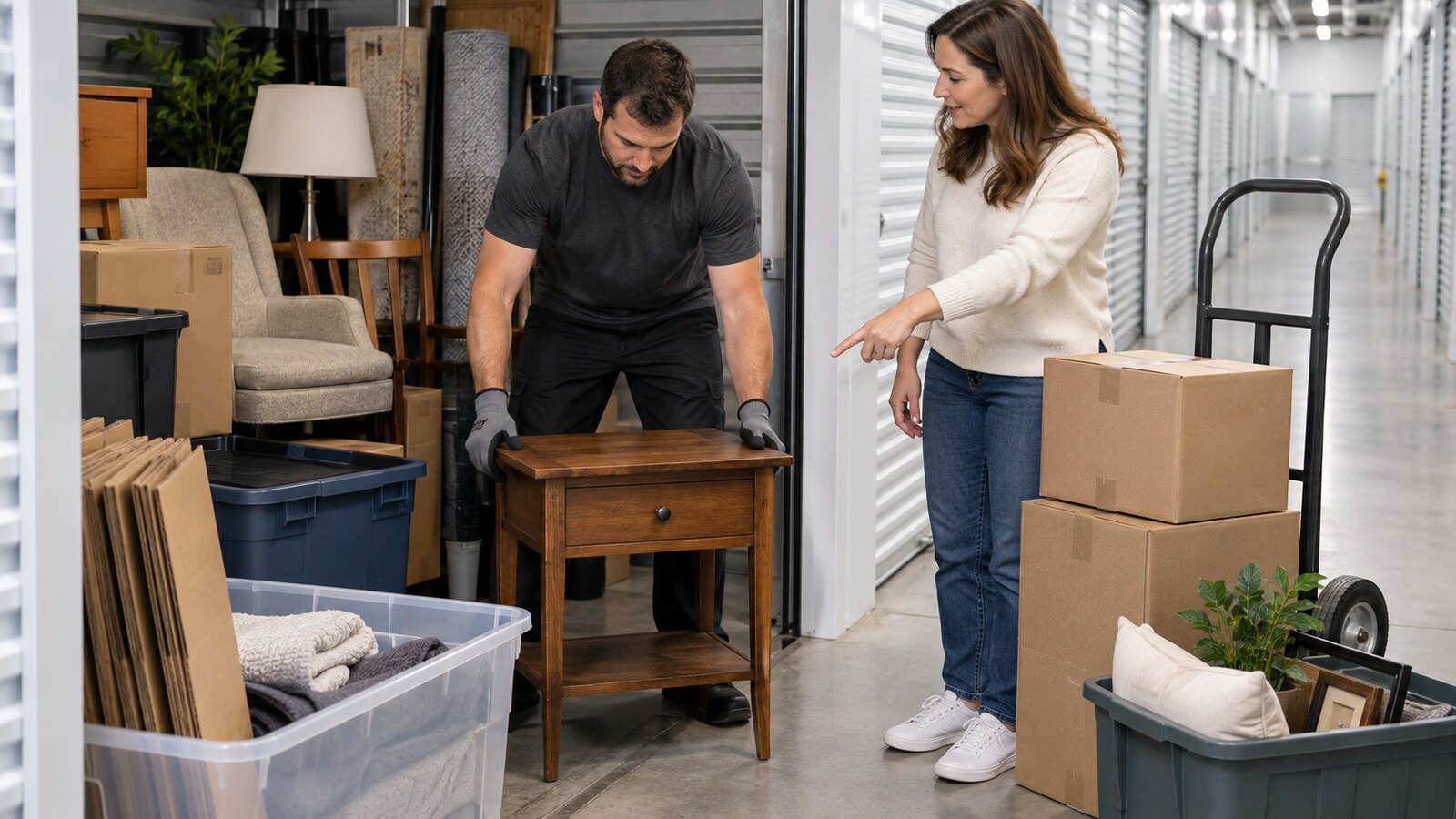
Work from the doorway inward only when that keeps the route safe. In some lockers, the first task is to remove one approved large item so there is room to sort. In others, opening a few accessible boxes first prevents something important from being carried away accidentally.
Separate anything that needs a special route
Mattabo’s junk-removal scope is for ordinary non-hazardous material. Do not place paint, fuel, propane cylinders, solvents, chemicals, ammunition, medical sharps, unknown liquids or other hazardous material into the removal group. Batteries, electronics, confidential records and certain appliances may also need their own handling or approved destination.
If a sealed container is leaking, swollen, unlabelled or giving off an odour, stop and keep people away from it. Do not open it to identify the contents. The owner or facility should arrange appropriate advice or disposal rather than treating it as ordinary household junk.
Personal records deserve their own plan. Tax papers, identification, photographs and legal documents should be reviewed by the owner. Shredding or secure document services may be appropriate for private paperwork, but that decision should not be made casually during a rushed loading window.
Plan the route from locker to loading area
Walk the route before loading starts. Check corners, door thresholds, elevator clearances, ramps and the distance to the vehicle. Keep corridor doors, fire equipment and neighbouring lockers unobstructed. A clear route is especially important when other customers are using the facility.
Choose equipment for the actual contents: a flat dolly for stable furniture, a hand truck for suitable stacked boxes, moving blankets for finished surfaces and straps where they can be used safely. Do not overload carts or stack boxes so high that the operator cannot see ahead.
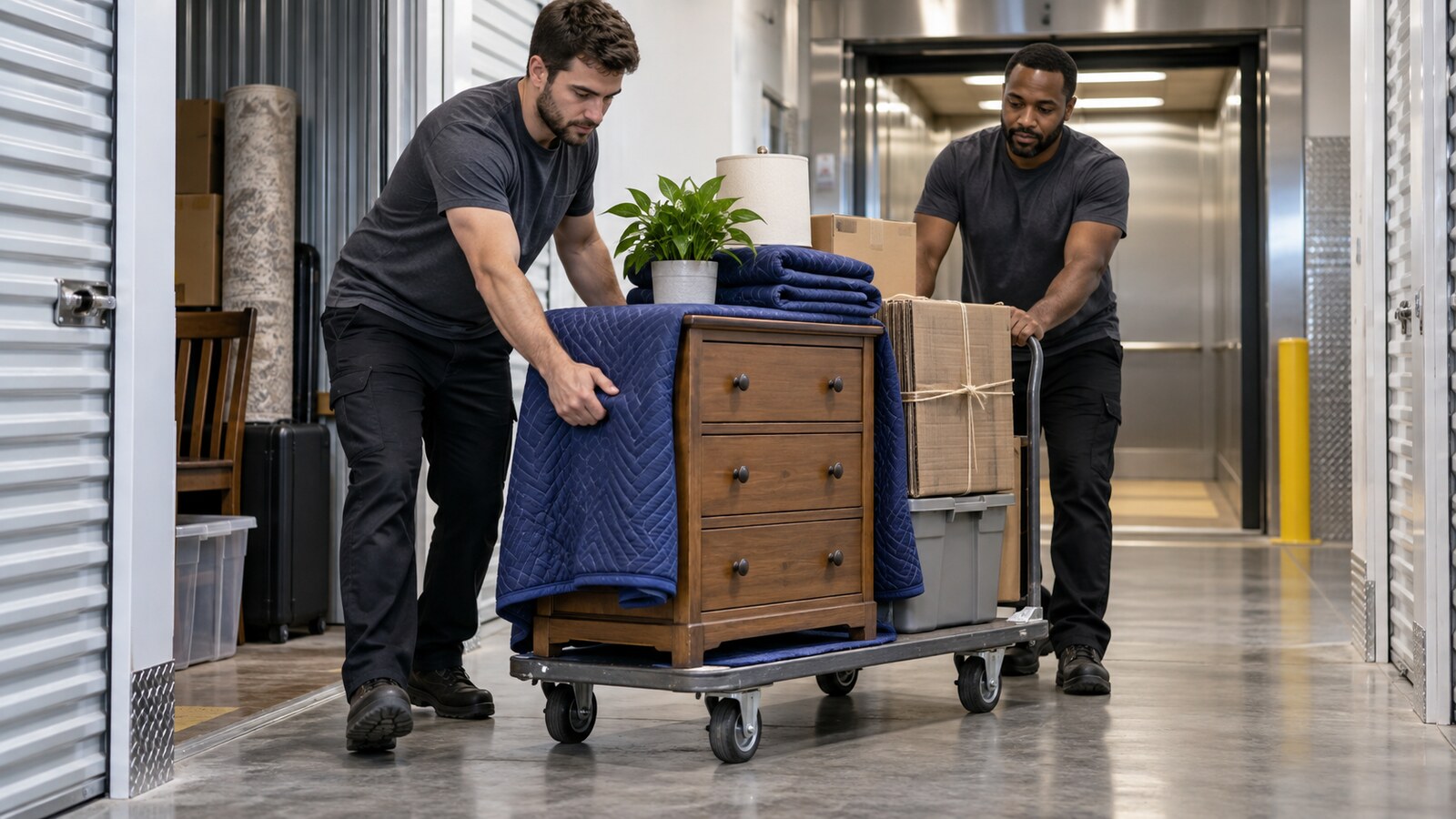
Use two people for bulky pieces that require coordinated handling. Empty drawers when their weight or contents make the furniture harder to control, then secure the drawers for transport. Protect corners and elevator walls as required by the facility. Speed comes from preparation and a clear route, not from carrying more than can be handled safely.
Handle furniture, boxes and electronics carefully
Inspect furniture before lifting. Loose legs, glass panels, removable shelves and damaged joints can change how a piece should move. Photograph valuable or fragile items before handling and point out existing damage. A cleanout is not the right time to discover that a table was being held together by one loose fastener.
Test box weight from a stable position before committing to the lift. Reinforce a weak bottom or transfer contents to a sound container rather than hoping the box survives the corridor. Books, dishes and paper can make a small carton unexpectedly heavy, while oversized boxes filled with soft goods may block the operator’s view.
Electronics should be kept dry and protected from impact. Remove loose cords and accessories so they do not catch on doors or wheels. If an electronic item is approved for removal rather than reuse, confirm the appropriate destination instead of mixing it automatically with general waste.
Leave enough time for the final handover
Plan to finish loading before the last possible access window. The locker still needs a final sweep, a check behind shelving and a review of the hallway and loading area. Remove all approved contents, packing scraps and loose debris. Do not leave unwanted items beside a facility bin, in the corridor or outside the loading door unless the facility has expressly directed that method.
Photograph the empty unit from the doorway and record the condition of the floor, walls and door. Check that borrowed carts have been returned and that no straps, blankets, hardware or small personal items remain. Follow the facility’s instructions for removing the lock and completing the move-out.
Storage-locker cleanout checklist
- Confirm the final access time and facility move-out procedure.
- Identify who can approve every keep, donate and removal decision.
- Photograph the contents and measure large furniture and tight openings.
- Separate ordinary non-hazardous removal items from anything needing a special route.
- Protect documents, valuables, electronics and fragile belongings.
- Keep corridors, neighbouring lockers and safety equipment unobstructed.
- Use suitable dollies, blankets and safe team handling for bulky pieces.
- Sweep the unit and photograph the final condition before handover.
What to send for a firm quote
Send wide photos from the locker doorway, closer photos of the largest items, the approximate unit size, floor or elevator details, loading access, the amount being kept and the move-out deadline. Mention stairs, long corridors, parking limits or items that may require disassembly. Do not include hazardous or unknown materials in an ordinary junk-removal request.
Mattabo Property Care is fully insured for the services it provides.
Same-day service is often available but is not guaranteed until Mattabo confirms the appointment.
Readers can send photos, their Ottawa address and deadline for a firm quote.
A quote request is not a confirmed booking.
Photos are illustrative examples of typical residential service results.