Seasonal Property Care
Ottawa Winter Equipment Storage Reset: A Practical Plan for Snowblowers, Shovels and Ice Melt
A practical Ottawa guide to organizing snowblowers, shovels, traction products and winter tools so garages and sheds stay clear, accessible and ready for regular use.
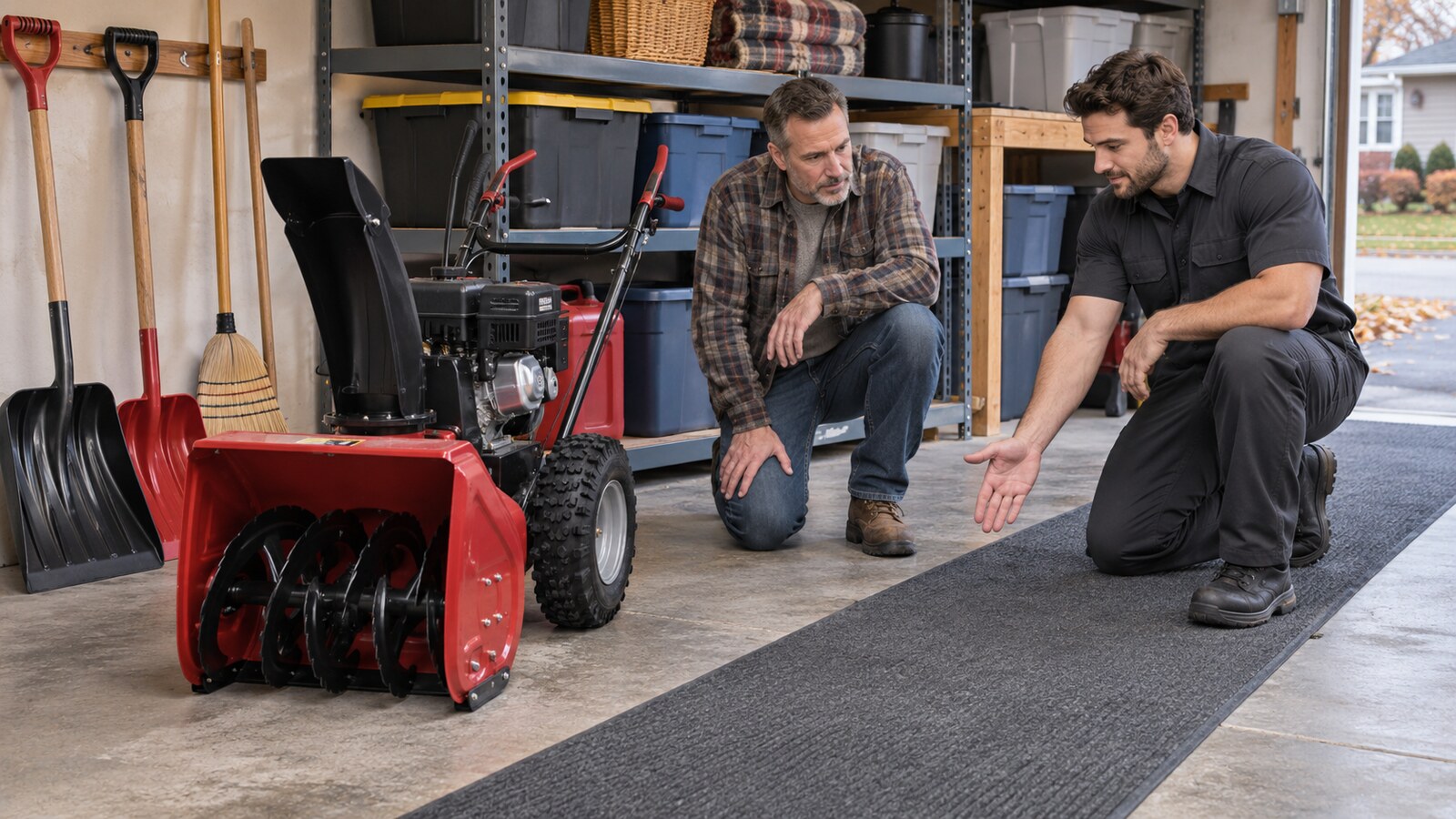
Winter equipment is most useful when it can be reached without moving half a garage or shed. A snowblower behind summer furniture, scattered shovels and opened bags of traction product can turn routine clearing into an awkward search. In Ottawa homes and managed properties, a storage reset creates a clear route and shows what is ready for use.
This is an organization and access job, not mechanical service. The goal is to identify the equipment that belongs in the winter zone, remove ordinary clutter from its path and arrange the space so people can enter, retrieve a tool and leave safely. Fuel, batteries, repairs and product handling should follow the equipment or product manufacturer’s instructions and any requirements that apply to the property.
Choose the winter access zone first
Start with the route from the storage area to the driveway, walkway or service entrance. A snowblower needs enough room to roll out without scraping a vehicle, striking shelving or requiring a tight turn over a threshold. Hand tools should be close enough to reach without stepping around the machine. In a shared property, the winter zone should not block doors, panels, stairs, waste areas or another tenant’s storage.
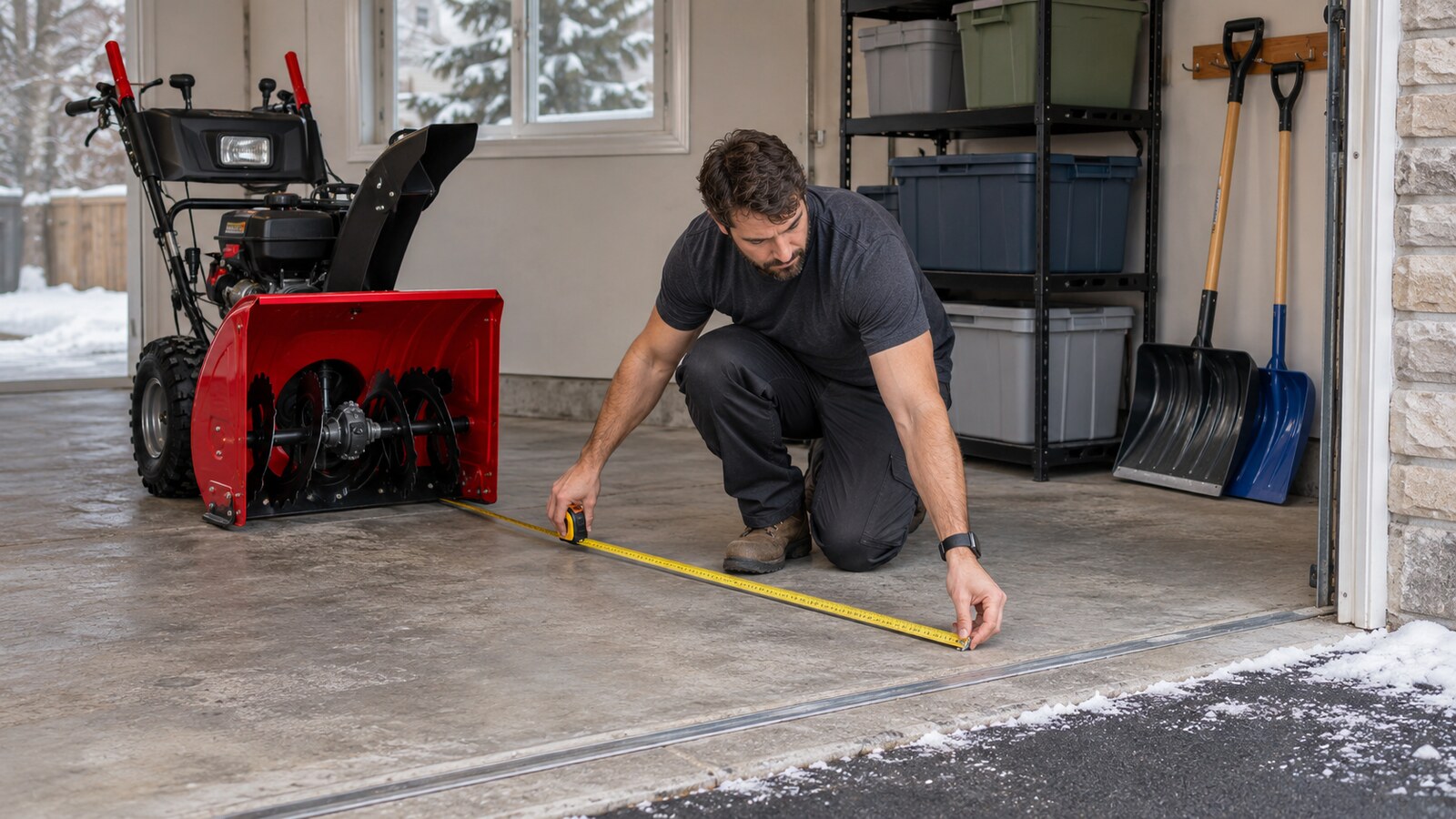
Measure the usable path rather than the total room size. Check the narrowest point, door swing, shelving depth and clearance beside parked vehicles. If the equipment must cross a finished floor or a raised threshold, decide how that surface will be protected before the area is loaded. Keep the route visible and avoid creating a narrow passage that becomes harder to use while wearing winter clothing.
- Confirm which exterior door or garage bay will be used during winter.
- Leave room to operate the door without moving equipment first.
- Keep electrical panels, shutoffs and mechanical equipment accessible.
- Reserve a stable wall section for hand tools and small accessories.
- Do not place winter supplies in a stair, lobby or required exit route.
Sort equipment by how often it is used
Place the items needed after most snowfalls at the front of the winter zone. That usually means the primary shovel, a broom or scraper, and the snowblower when one is used. Backup tools, roof rakes, spare handles and less frequently used accessories can sit farther back as long as they remain labelled and stable. Summer tools can move to a secondary wall or shelf instead of competing for the same floor space.
Identify duplicates and damaged ordinary items. A cracked plastic shovel, loose handle or empty container should not stay in the active position simply because it was there last winter. Set questionable equipment aside for the owner or property manager to review. Do not discard tools, parts or supplies without approval.
Prepare the snowblower area without servicing the machine
Park the snowblower on a level, stable section of floor with its controls protected from passing traffic. Leave enough space to hold the handle and begin rolling it without pulling from the side. Keep loose cords, bags and long-handled tools out of the wheel or track area. If a protective mat is used, it should lie flat, suit the floor and extend far enough to catch routine meltwater without creating a curled edge.
Do not treat a storage reset as a reason to experiment with fuel, batteries, belts or unfamiliar controls. Follow the owner’s manual and arrange qualified service when the machine needs maintenance. If there is a leak, strong fuel odour, damaged wiring or an uncertain container near the equipment, stop the clean-up and have the responsible person address it before the area is rearranged.
Store shovels and long tools so they cannot fall
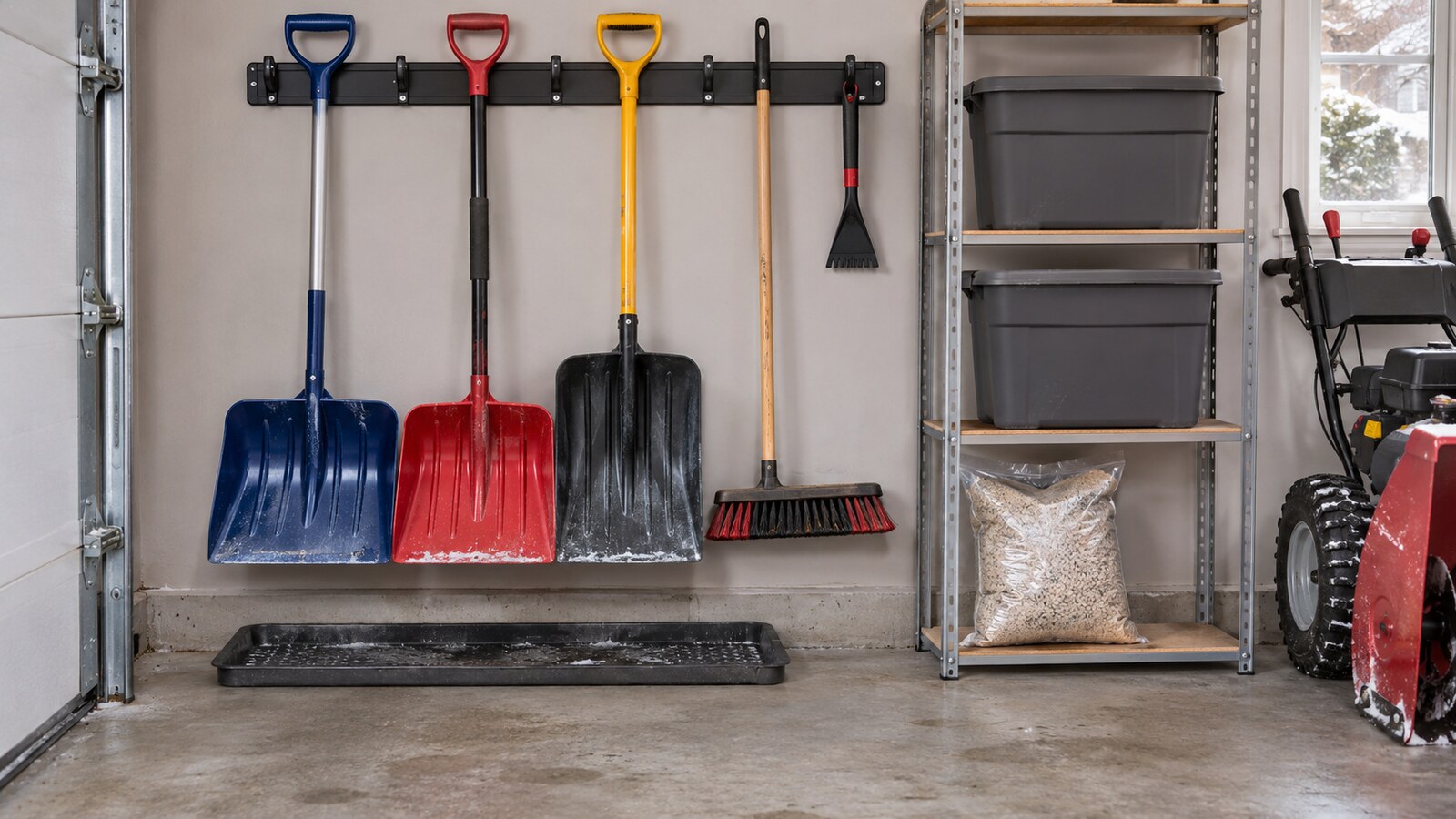
Long-handled tools should be supported rather than leaned in a loose bundle. Use an existing rack or approved wall storage that suits the tool weight and wall construction. Keep blades and scrapers facing a direction that will not catch clothing or scratch a vehicle. A floor-standing rack can work where wall mounting is not permitted, but it still needs a stable location outside the main walking path.
Group tools by purpose: clearing, breaking light surface ice, brushing vehicles and handling steps or entrances. Labels can help in a shared garage or maintenance room, but avoid creating a complicated system that people will ignore. The best arrangement makes the most frequently used shovel obvious and returns it to the same place after each use.
Keep ice melt and traction products dry and contained
Keep traction products in their original labelled packaging or in a compatible, clearly identified container used according to the product directions. Place opened bags inside a stable bin or tray so granules do not spread across the floor. Choose a dry location that is reachable without lifting over the snowblower or a parked vehicle, and keep the product away from children and pets as directed on its label.
A small scoop should have a consistent storage spot rather than being buried in the bag. Wipe up ordinary dry spills promptly using the product guidance so granules are not tracked into the home or common areas. Unknown, wet or damaged containers should be separated for the owner or property manager to assess; do not combine products or transfer them into an unlabelled household container.
Protect floors and control routine meltwater
Snow equipment brings water, grit and road residue back into storage. Use floor protection that is flat, stable and appropriate for the surface. Leave room to clean around the mat or tray rather than trapping moisture beneath surrounding boxes. Cardboard is a poor long-term floor layer because it can soften, shift and hide what is happening underneath.
Keep absorbent supplies or a dedicated garage mop nearby if that fits the property’s routine. Check that meltwater is not being directed toward stored belongings, wall finishes or an interior doorway. A storage reset can improve access and containment, but it does not correct drainage, foundation or water-entry problems. Those conditions need separate assessment.
Build a simple return-to-place routine
The winter zone will only stay useful if equipment has a clear return position. Marking the snowblower footprint with removable floor-safe indicators can help where several people use the garage. Keep hooks, racks and bins lightly loaded so putting a tool away does not require rearranging the entire wall. After a snowfall, let equipment shed routine snow in its protected area and restore the walking path once conditions allow.
- Return shovels and scrapers to the same stable rack.
- Keep the snowblower roll-out path free of bins and cords.
- Close and contain traction-product packaging after use.
- Remove ordinary packaging and empty approved containers from the floor.
- Report leaks, damaged equipment or water problems instead of hiding them behind storage.
Document the setup at managed properties
For landlords and property managers, photograph the finished winter zone and note which equipment belongs to the property. Record where keys, approved extension cords, spare parts or instructions are kept without placing sensitive access information in a public area. If staff or contractors share the equipment, confirm who is responsible for inspection, service and replacement.
Before closing the task, check the garage or shed door, interior door, floor route and access to building systems. Remove temporary sorting piles and ordinary junk approved for removal. A clear final photo provides a useful reference if the space becomes crowded later in the season or needs to be reset between tenants.
What to send for an Ottawa winter storage quote
Send wide photos of the garage, shed or maintenance room, plus images of the snowblower, hand tools, shelving and the full route to the exterior. Include the Ottawa address, access instructions, parking constraints, ownership of stored items and the deadline. Identify any fuel odour, leak, damaged container, pest evidence, heavy shelving or blocked electrical equipment before the scope is confirmed.
A useful winter equipment area is not packed tightly; it is arranged around a clear route and a predictable routine. By separating summer storage, supporting long tools, containing traction products and protecting the floor, Ottawa homeowners and property managers can make routine winter work easier without turning the reset into an unsafe repair or disposal job.
Photos are illustrative examples of typical residential service results.