Pressure Washing
Pressure Washing an Ottawa Wood Fence: A Practical Guide to Boards, Gates and Landscaping
A practical Ottawa guide to inspecting, preparing and pressure washing a wood fence while protecting gates, plants and nearby property.
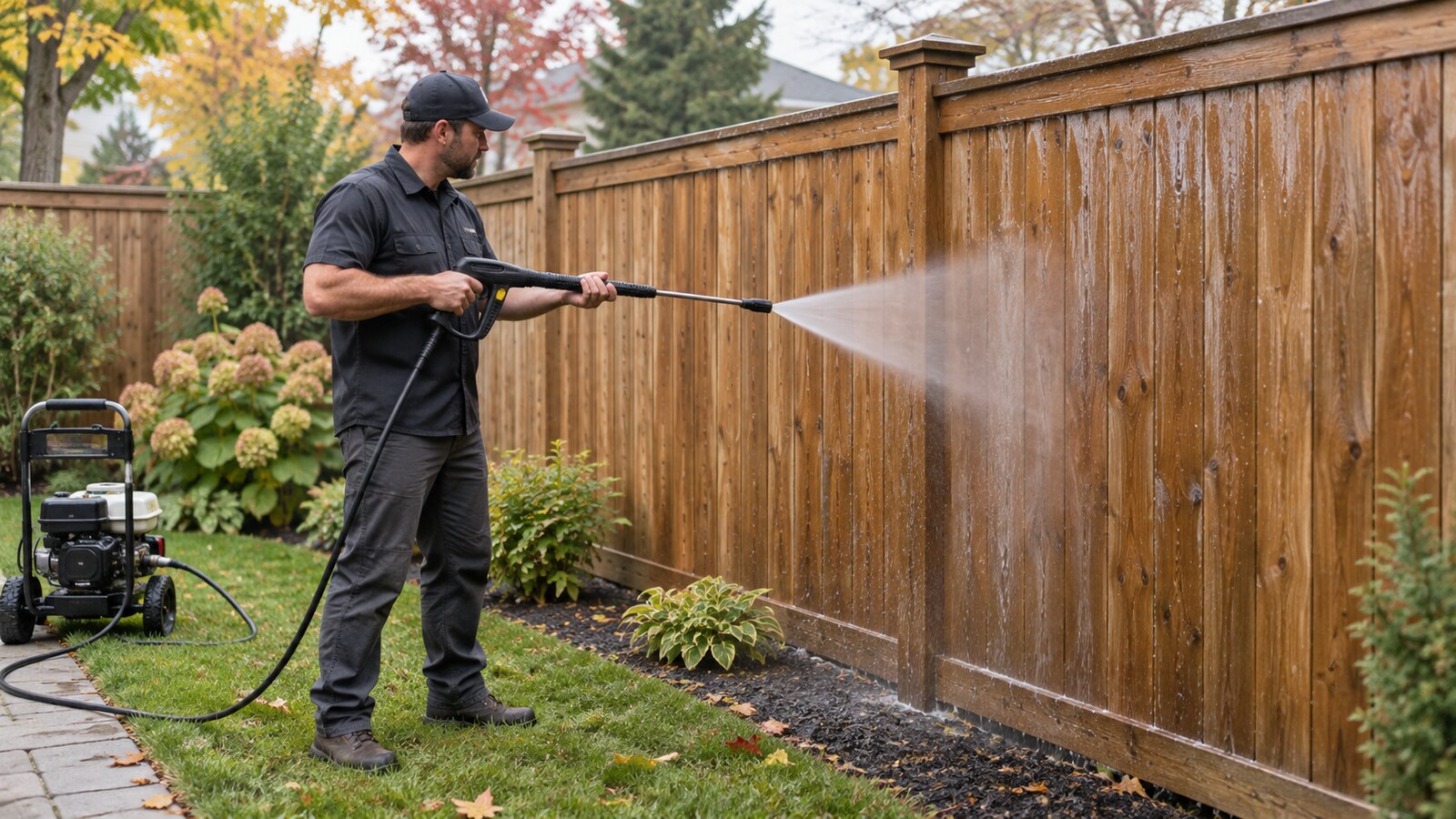
A wood fence can collect dust, pollen, organic growth and splashback while still being structurally sound. Pressure washing may be part of a useful maintenance plan, but fence boards are thinner and less forgiving than many concrete surfaces. Too much pressure, a narrow tip or inconsistent distance can leave visible marks, raise the grain or drive water into weak joints.
A practical Ottawa fence-cleaning plan begins with ownership, access and condition. It should protect the wood, neighbouring property and landscaping while setting realistic expectations for weathering, old coatings and damaged boards. The objective is controlled surface cleaning, not forcing every mark out of the fence.
Confirm the fence and the working boundaries
Identify which fence sections are in scope and who has authority to approve the work. A shared boundary fence may have plants, furniture or finishes on both sides. Cleaning one face can still send mist, runoff or loosened debris through gaps, so access and protection on the opposite side should be discussed before the appointment.
Measure the approximate length and height, count gates and note tight passages. Include lattice, decorative caps, retaining edges and any section hidden behind a shed or dense planting. These details affect the method and the time needed to protect the work area.
Photograph the full run from both ends, then take closer images of gates, posts, worn coatings and vegetation. Keep house numbers, neighbouring windows and other private details out of photos sent for quoting where possible.
Identify the wood and existing finish
A new cedar fence, older pressure-treated lumber and painted or stained boards do not respond in exactly the same way. Note whether the surface is bare, sealed, stained or painted. A coating that is already peeling may release more during cleaning, while weathered bare wood may show colour variation that washing cannot erase.
Pressure washing is not a repair and does not restore missing wood fibres. Grey weathering, rust marks around hardware, tannin variation and deep discolouration may remain. If the fence will be refinished later, the person applying the finish should confirm the preparation and drying requirements for that product.
Inspect the fence before introducing water
Check boards for splits, soft areas, loose fasteners, severe warping and movement at the rails. Look at the base of each post and any point where wood meets soil, masonry or a retaining wall. A leaning post or unstable panel needs repair before cleaning pressure is added.
Open and close every gate. Confirm that hinges, latches and stops are secure and that the gate will not swing into the operator, hose or equipment. Remove lightweight decorations and secure loose caps rather than expecting the spray to work around them.
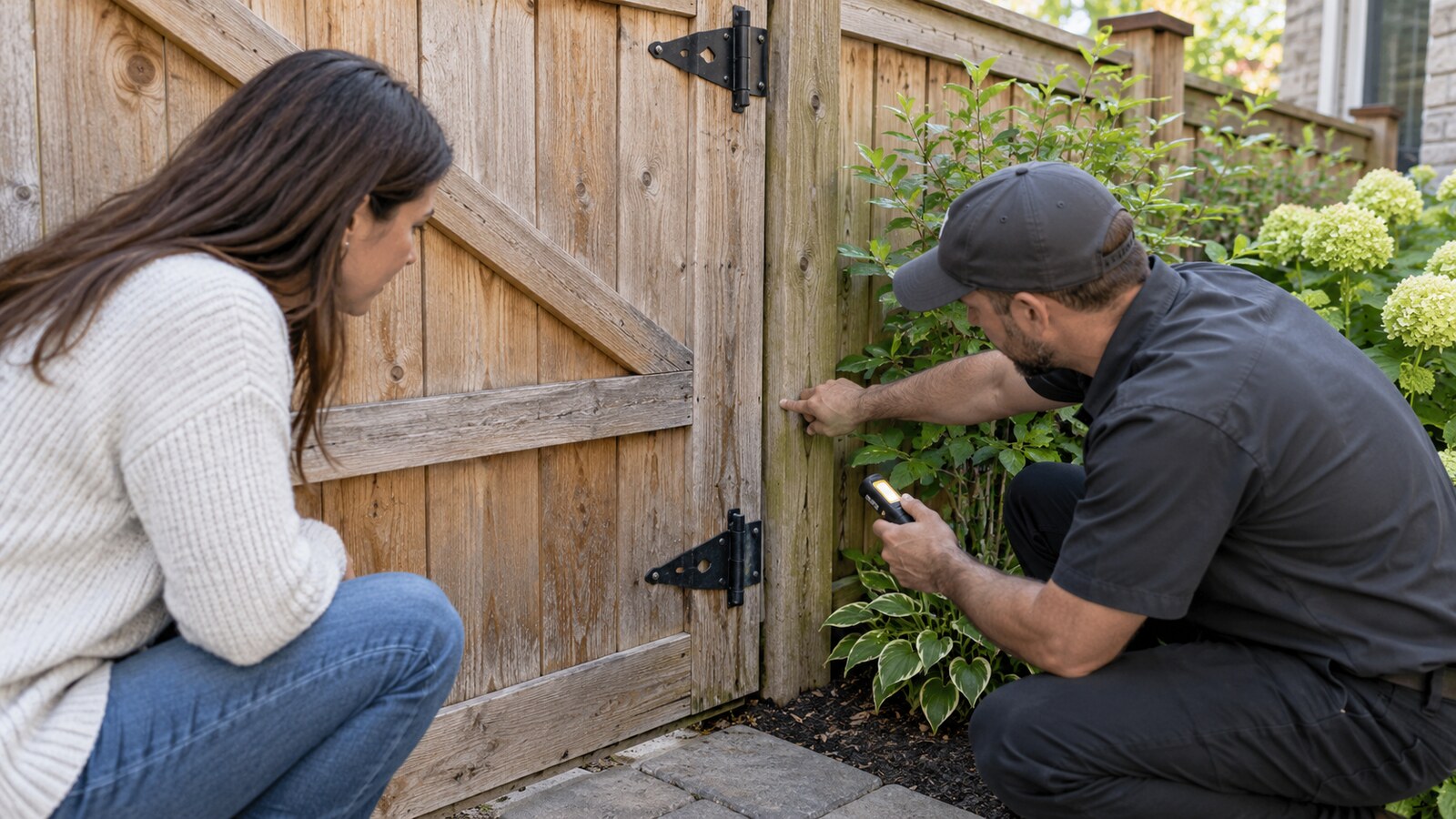
Inspect both sides for electrical fixtures, outlets, low-voltage lighting, cables and neighbouring items. Damaged electrical components or exposed wiring should be addressed by a qualified professional before water is used nearby.
Prepare plants, furniture and adjacent surfaces
Move barbecues, cushions, planters, toys and lightweight furniture out of the spray and runoff zone. Protect nearby doors, painted trim and delicate fixtures where necessary. Keep the working route clear enough that hoses do not pull across plants or create a trip point.
Water and protect appropriate plants according to the cleaning-product directions and site conditions. A cover should not be left in place so long that it traps heat or crushes foliage. If vegetation grows tightly through the fence, the cleaning scope may need to stop short of those sections.
Sweep or collect loose leaves and ordinary debris before washing. Water should not be used to push mulch, soil or garbage onto neighbouring property, into a pool or across a public walkway.
Use the least aggressive effective method
Start with a small inconspicuous test section. A suitable cleaner, controlled dwell time and a soft-bristle brush can loosen ordinary surface soil with less pressure. Products should be chosen for the confirmed wood and finish, mixed and used according to their directions, and never combined casually.
Work in manageable sections so cleaner does not dry on the boards. Apply it evenly, keep it away from excluded surfaces and rinse within the recommended window. More product or longer dwell time is not automatically better.
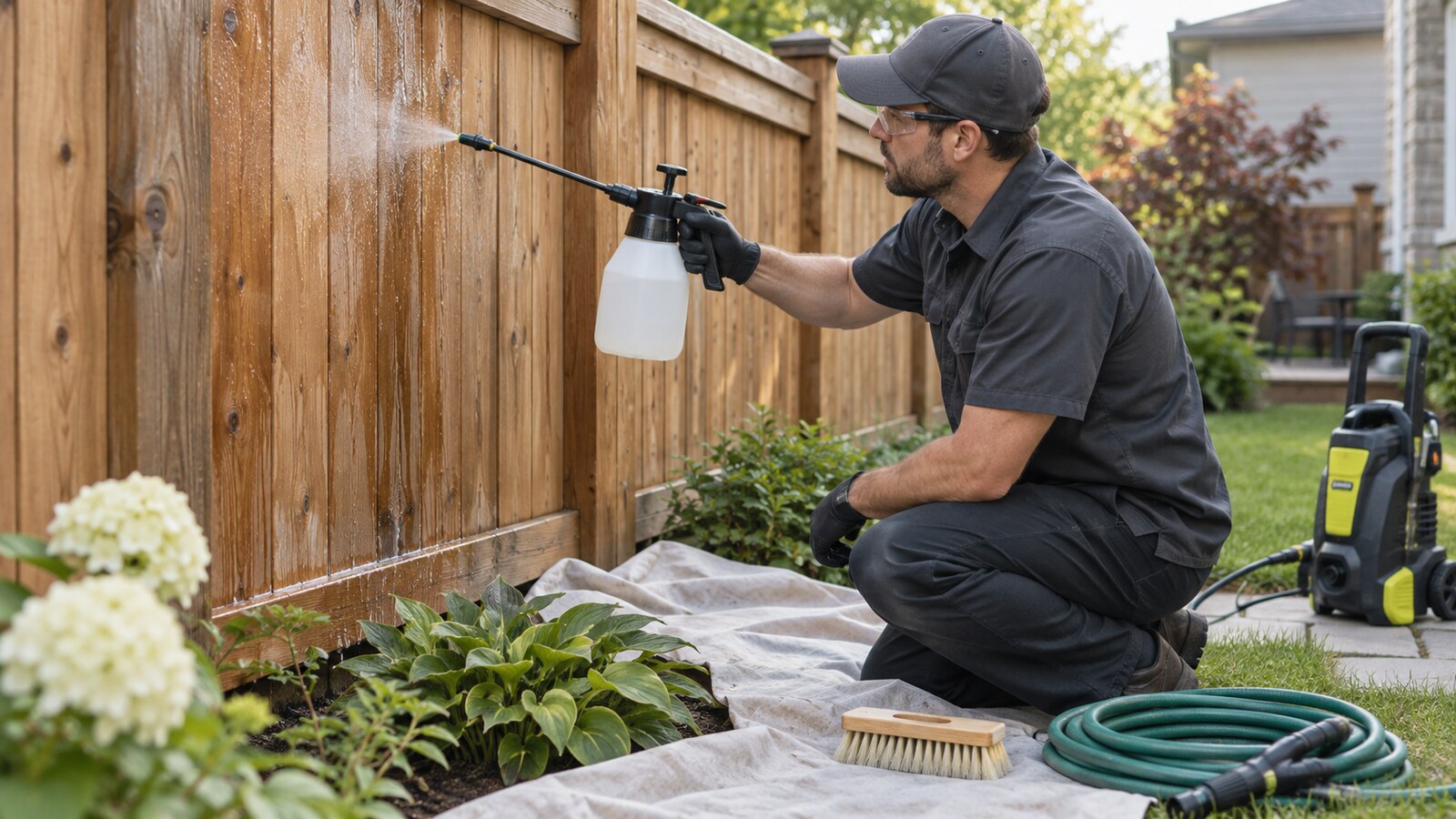
If the test area reveals loose coating, severe fibre damage or unexpected colour change, pause and revise the plan. A different cleaning method or a repair and refinishing specialist may be more appropriate than continuing across the fence.
Control pressure, distance and direction
Use a broad fan pattern and begin farther from the surface. Move consistently with the grain and keep the working distance steady. Do not hold the spray in one place, carve at knots or chase dark marks with a narrow tip.
Fence edges, board ends, lattice, gates and weathered lower rails usually need a gentler approach than the centre of a sound board. Avoid forcing water upward behind caps, through open joints or directly into gate hardware. Cleaning both sides should be planned as two controlled faces, not done blindly through the gaps.
Keep the pressure washer on stable ground with ventilation and clearance appropriate to the equipment. Route hoses away from the operator’s feet, gate swings, garden beds and pedestrian paths. Children and pets should remain outside the work area.
Manage runoff and neighbouring property
Before starting, identify the slope, low points and every place water can leave the yard. Confirm where runoff can be managed without carrying cleaner, loose coating or soil into an unsuitable area. If control is not practical, reduce the scope or choose another method.
Notify an affected neighbour when reasonable access or protection is needed. Close nearby windows, move vehicles or furniture where agreed, and avoid spraying across the property line. A clean fence is not worth creating a dispute or damaging something outside the approved work area.
Allow the fence to dry and inspect the result
After the final rinse, remove protective materials and check plants, gates, paths and adjacent walls. Pick up loosened debris rather than leaving it in the garden. Operate each gate again and confirm that the latch and swing remain normal.
Let the fence dry naturally before judging the final colour. Wet wood appears darker and can hide variation. Drying time depends on weather, shade, airflow and the fence itself, so do not promise a universal schedule for staining or sealing.
Record any loose boards, deteriorated posts, failed coating or permanent marks that remain. Routine cleaning can improve the surface, but it cannot straighten warped lumber, rebuild soft wood or guarantee a uniform new-board appearance.
Wood-fence pressure-washing checklist
- Confirm ownership, access and the exact fence sections in scope.
- Identify the wood, coating and intended future finish.
- Photograph boards, posts, gates, plants and adjacent surfaces.
- Repair or exclude unstable panels, posts and electrical hazards.
- Move furniture and protect plants and neighbouring property appropriately.
- Test cleaner and pressure on a small inconspicuous area.
- Use a broad fan pattern and consistent working distance.
- Control runoff instead of pushing it beyond the approved area.
- Inspect gates, plants and surrounding surfaces after rinsing.
What to send for a firm quote
Send wide photos of the fence run and both sides where accessible, close-ups of the boards and existing finish, the approximate length and height, the number of gates, water access, nearby plants and the equipment route. Include the Ottawa address, deadline and any planned staining or repair work.
Mattabo Property Care is fully insured for the services it provides.
Same-day service is often available but is not guaranteed until Mattabo confirms the appointment.
Readers can send photos, their Ottawa address and deadline for a firm quote.
A quote request is not a confirmed booking.
Photos are illustrative examples of typical residential service results.